“The Legislature ran out the clock on passing meaningful legislation on climate change, despite our living through a summer that continues to break heat records,” said Progressive Massachusetts policy director Jonathan Cohn.
“The Legislature whittled away at the policy components of Gov. Healey’s housing bond bill, caving to real estate interests and ignoring public opinion. We have a housing crisis and a climate crisis, and our Legislature is in clear denial about both,” he said.
“Jonathan Cohn, the political directorof the group Progressive Massachusetts, argues that this dynamic creates a structural problem that naturally leads to a slowed-down pace.
“In any system … if you have too few people in charge of too many decisions, you get a bottleneck effect,” Cohn said. “And you have that with the Legislature, where you know that the decision making is ultimately Ron Mariano’s decision about what’s in the bill, Karen Spilka’s decision about what’s in the bill … If it’s all just coming through one person, that just slows everything down even more.”
But Cohn also believes there’s a tactical consideration at play. By finalizing key legislation at the last minute, he says — and packing individual bills with a sprawling array of provisions on a particular topic — the House and Senate pave the way for marathon negotiating sessions just prior to the session’s end, in which each side defers to its counterpart in some areas and has the favor returned in others.
“Almost to a person, they’ll just all be back in January,” Cohn, of Progressive Mass, said of state lawmakers. “A handful of retirements. Maybe somebody might lose a seat in a primary or general. But they’ll all be back. And there’s often a way in which they just see it as, ‘Well, we didn’t finish now. We’ll come back in a few months and maybe we’ll pass it then.’ … It flattens the sense of time, because if it happens now, if it happens next year, it’s all the same.”
“Rather than advancing a robust, shared legislative agenda throughout the past year and a half, our Legislature pushed so many important priorities off to the very end of the session, creating bottlenecks and setting themselves up for failure,” said Jonathan Cohn, policy director at the group Progressive Massachusetts. “It does not have to be this way.”
Jonathan Cohn, policy director of Progressive Massachusetts, released the following statement from the organization about the Legislature’s adjournment with key work left undone
“We are disappointed and appalled to see the ostensibly full-time House and Senate adjourn this morning after failing to take decisive action on so many key issues.
Rather than advancing a robust shared legislative agenda throughout the past year and a half, our Legislature pushed so many important priorities off to the very end of the session, creating bottlenecks and setting themselves up for failure.
It does not have to be this way. Why is it? Because of a State House Leadership that is overly deferential to corporate interests and lacking in vision, an autocratic internal structure, and the learned helplessness of too much of the rank-and-file.
The Legislature ran out the clock on passing meaningful legislation on climate change, despite our living through a summer that continues to break heat records. The Legislature whittled away at the policy components of Governor Healey’s housing bond bill, caving to real estate interests and ignoring public opinion. We have a housing crisis and a climate crisis, and our Legislature is in clear denial about both.
The list of bills left stalled or defeated through inaction is long and includes legislation that one or both chambers have passed overwhelmingly in past sessions. Next year, we fully expect many of these bills to be refiled, and the Legislature will hold hearings on them in which they will pretend to hear about them for the first time, an insult to the public’s intelligence and their own.
Advocates have worked hard this session to build momentum for legislation on housing, climate, criminal legal reform, maternal health justice, health care reform, and countless other issues. Their voices, backed by robust public support for action, should be heard.
The ongoing Veepstakes has highlighted the prolific legislating of narrowly held Democratic majorities in Michigan and Minnesota. When Democrats finally achieved governing trifectas, they immediately went to work to pass long lists of held-up priorities, showing what can be done when the government prioritizes the well-being of the public. Massachusetts likewise finally achieved a Democratic governing trifecta (despite long having the third largest Democratic supermajority in the country) and instead demonstrated dysfunction and lack of ambition. As Vice President Kamala Harris is trying to make the case to the American public that voters should give Democrats a trifecta in DC this November, our Legislature isn’t just failing the people of the commonwealth; they continue to fail the whole country.”
The 193rd legislative session of the Massachusetts General Court has been historically unproductive. As of July 29, fewer than 230 bills had been signed into law across the two years of the session. By contrast, the last several legislative sessions saw 564 (2021-2022), 539 (2019-2020), 626 (2017-2018), 635 (2015-2016), and 701 (2013-2014) bills signed into law.
Of the 227 bills signed into law this session as of Monday, 203 were about one city, one town, one person, or a combination of several towns.
Progressive Massachusetts is a statewide, multi-issue, membership-based advocacy organization focused on shared prosperity, racial and social justice, strong democracy, and environmental sustainability. The organization was founded in 2013 and has 21 chapters across the Commonwealth.
“It’s an idiosyncrasy that drives some crazy, while others say it’s just pols being pols. The quirk isn’t limited to the Senate. Progressive Massachusetts noted that the House’s version of a climate bill drew 107 amendments, and 91 ended up withdrawn. “Our great deliberative body,” the advocacy group sarcastically posted last month to X, the social media site formerly known as Twitter.
According to Jonathan Cohn, the group’s policy director, the strategic case for moving a policy issue forward by taking to the floor via an amendment, even if it gets withdrawn, rests on the idea that enough people see or hear the speeches. “I don’t mean to burst the bubble of legislators, but people don’t watch it,” he said. Writing an opinion piece has more impact than a floor speech, which he likened to “fan service.”
“Filing an amendment, getting a handful of supporters and then saying, ‘I’m done, I’m withdrawing it,’ doesn’t move the ball forward,” Cohn added.
It also highlights the decline of debates. As the State House News Service summary of the Senate’s passage of a housing bill noted, “There was little disagreement and few divided votes.”
Beacon Hill observers say some lawmakers would prefer not to be put on the record about a topic that could cost them support, or even worse, reelection. That amounts to an “incumbent protection racket,” Cohn said.”
Although Massachusetts has a full-time legislature, the formal Legislative Session will end tomorrow.
After tomorrow (well, after the wee hours of Thursday morning), the State House will not likely be taking any more recorded votes for the rest of 2024.
As we noted last week, many important priorities are still in play. If you haven’t contacted your legislators yet, now is the best time.
Here’s what you can do:
Email Governor Healey in opposition to emergency shelter limits (new action alert)
Email your state senator about maternal health justice (new action alert)
Email your state rep in support of juvenile justice reform
Email the Housing Bill conference committee
Email the Climate Bill conference committee
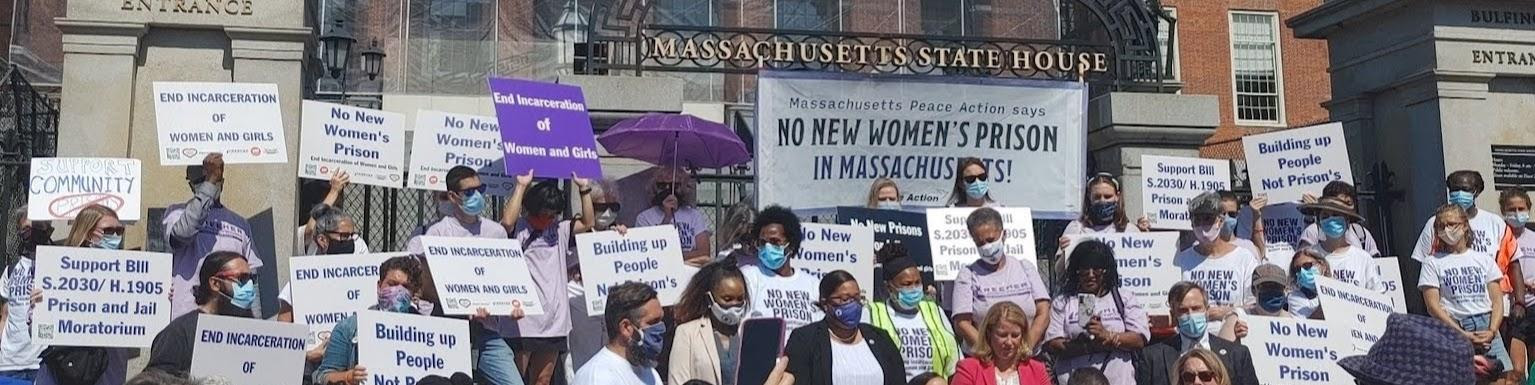
Email the Ways & Means chairs about the Prison Moratorium
And whichever action or actions you take, make sure to share it with your networks too to keep the momentum going. In solidarity, Jonathan Cohn Policy Director Progressive Massachusetts
Email Governor Healey in Opposition to Shelter Limits
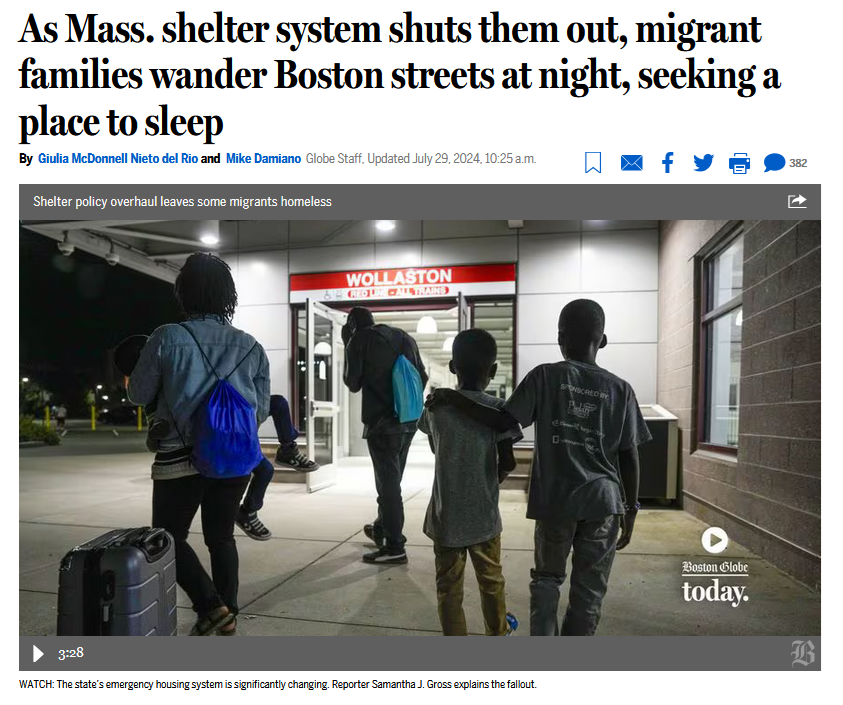
Last week, the Healey administration announced that it would limit stays in overflow shelters to five days beginning August 1st (this Thursday).
We can’t turn our back on our state’s right to shelter law (a law in which we should take pride), and we can’t turn our back on families seeking help. It’s simple: an affluent state like Massachusetts should not be kicking out families and young children to live on the streets.
Everyone in Massachusetts should be able to choose where they give birth and the type of maternity care that is most appropriate for their needs. Unfortunately, our state currently lags the nation when it comes to access to midwives, birth centers, home birth, and integration of care — models that can reverse our rising maternal mortality and growing racial inequities in birth outcomes.
To the Conferees: Chair Barrett, Chair Roy, Majority Leader Creem, Vice Chair Haggerty, and Ranking Members and Minority Leaders Tarr and Jones,
My name is Jonathan Cohn, and I am the policy director at Progressive Massachusetts. We are a statewide, multi-issue, grassroots membership organization focused on fighting for policy that would make our Commonwealth more equitable, just, sustainable, and democratic.
Thank you for your work in negotiating a final version of climate legislation, reconciling S.2838 and H.4884.
This past Monday was the hottest day on record, according to a European climate service. The urgency around robust and equitable climate action could not be clearer.
Massachusetts has in recent years made important commitments to reduce greenhouse gas emissions in line with the recommendations of the International Panel on Climate Change and the Paris Climate Agreement. Setting targets is critical, but meeting them requires real work, consisting of the decarbonization of all sectors of our economy. And we must do this work in a way that does not reproduce the inequities endemic to the fossil fuel economy from which we must transition away.
We urge you to include the following provisions of the Senate or House bills in the final legislation you produce:
Putting Gas Companies on a Path to Provide Clean, Non-Emitting Renewable Energy(Sections 46, 74, and 76 of the Senate Bill; Section 24 of the House bill): Among other measures, these sections would allow gas companies to sell networked geothermal energy, limit the expansion of new gas mains unless there are no feasible alternatives to gas, require that the public interest in greenhouse gas reductions be considered when evaluating proposed expansions to gas mains, permit gas companies to meet their “obligation to serve” by providing customers with renewable substitutes, encourage gas companies to repair or retire leak-prone pipelines, and require gas companies to implement an orderly transition to non-emitting energy for heating buildings.
In short, as the Department of Public Utilities made clear back in December, there cannot be a future for gas in Massachusetts. The DPU can only do so much on its own, and we need legislative action.
Electrifying the Commuter Rail System (Section 138 of the Senate Bill): This is a critical component of an MBTA-wide plan for decarbonization.
Easing Access to Solar in Historic Districts (Section 106 of the Senate Bill): We need to remove roadblocks to residential solar if we are to achieve the scale necessary.
Updating Our Bottle Bill (Sections 45-58 of the Senate Bill)
Updating the Massport Charter to include attention to climate change and environmental justice (Sections 108 & 109 of the Senate bill sections; Sections 65A&B of the House bill)
Removing Woody Biomass from the Greenhouse Gas Emissions Standard for Municipal Lighting Plants (Section 115 of the Senate Bill)
Establishing Labor Standards and Reporting for Clean Energy Procurement (as reflected in the adopted amendments #120 in the Senate and #100 in the House)
Similarly, we echo the demands of the Mass Power Forward coalition to include the following in a final bill:
Siting and Permit Approvals tied to a robust cumulative impact analysis. Such an analysis must be holistic, incorporating past and current exposures to pollution and other chemical sources, as well as other factors found in the built, natural, and social environments, and their impact on quality of life and public health.
Clean air for environmental justice populations and all. (as found in Senate Bill Amendment 100; House Bill amendment 15). Environmental Justice (EJ) populations are disproportionately affected by air pollution. By including air quality policy in the climate bill, we will improve indoor and outdoor air, especially for EJ populations and residents burdened by pollution from congested roadways and ports, and mold in housing.
Ending large-scale gas pipeline expansion (as found in Senate Bill Amendment 16; House bill Amendment 17): Every new mile of high-pressure pipeline installed is an expensive asset that will have to be paid off over decades by ratepayers or, if stranded, by taxpayers, and such expansion irreconcilable with meeting our climate goals.
Thank you again for your work on this important issue.
The best time to contact your legislators is yesterday. The second best time is today.
That’s because time is short. The current legislative session will wrap up next Wednesday, and major decisions will be made between now and then.
As I noted in Monday’s update, this email will be longer than I’d like. That’s because our Legislature, despite being a full-time body, has the tendency to push off everything to the last month, last weeks, even last day of the legislative session. The public deserves a better process, and I’m sure most legislators would prefer one too.
But we wanted to keep you in the loop about what’s happening and what you can do. There will be an array of actions you can take: make a plan to choose at least one action step, and talk to friends about it.
Here’s what you can do:
Email your state rep in support of Raise the Age
Email the Affordable Homes Act Conference Committee
Email the Climate Bill Conference Committee
Email the Ways & Means chairs about the Prison Moratorium
Show up on Monday in support of families experiencing homelessness
Make sure to check out our blog for other updates, and stay tuned for action steps. Many bills move quickly at the end of the session (Example: We just learned that the Senate is taking up an important maternal health bill next Tuesday.) In solidarity, Jonathan Cohn Policy Director
Progressive Massachusetts
Email to Your State Rep: Raise the Age
On July 11, during the debate on its economic development, the MA Senate voted 31 to 9 to keep 18-year-olds out of the adult prison system.
Shifting legal system-involved youth from the adult criminal legal system into the juvenile system improves young people’s access to education and skills training, even if they are never incarcerated. Young people’s prosecution as adults during their late adolescence derails their education, which can have serious effects on their ability to attain employment during these critical adolescent years, diminishing their lifetime earnings, and preventing them from contributing fully to the Massachusetts economy.
The economic development bill is now in Conference Committee, where three senators and three representatives will negotiate a final bill. Here’s what you can do:
Email the Affordable Homes Act Conference Committee
Last month, the MA House and MA Senate passed versions of Governor Maura Healey’s Affordable Homes Act.
WHAT HAPPENED: Like Healey’s original version of the bill, both bills established an Office of Fair Housing, legalized accessory dwelling units in single-family zoning districts without undue restrictions, streamlined the use of state-owned land for housing, and increased the bond authorizations for public housing, building decarbonization, and many more housing initiatives. Unfortunately, however, both chambers caved to the real estate lobby and axed the widely popular local option real estate transfer fee (which would have allowed cities and towns to raise extra money to invest in affordable housing).
But the two bills had a number of differences, and a Conference Committee of three senators and three representatives are negotiating final details.
WHAT IS AT STAKE: We have a displacement crisis in Massachusetts, and it is essential that the final version of the Affordable Homes Act contain policies to help renters and working-class homeowners.
Creating a process for sealing eviction records (Senate bill)
Banning brokers’ fees (Senate bill)
Establishing a Tenant Opportunity to Purchase local option (House bill)
Creating a Foreclosure Mediation Pilot Program (Senate bill)
A Conference Committee of three state senators and three state representatives are negotiating the final details of the bill.
If we are to make a dent at addressing the affordable housing crisis, we need more investment, we need more housing production, and we need policies to prevent displacement. The Legislature shouldn’t leave out that critical final piece.
You can also email them directly and cc your own legislators, using the following emails:
Last week, the House took up its climate omnibus bill. While the bill contains a number of important reforms, it lacks the ambition of the Senate’s recent bill, which did far more to accelerate the transition away from gas. And the Senate’s bill still hadn’t gone far enough to meet the moment, especially around environmental justice.
Mass Power Forward, the coalition of climate justice advocacy groups, is asking people to email the six-person Conference Committee finalizing the details of this bill. Here is a template you can use:
I am writing to you regarding the Climate Omnibus bill. Both the Senate and the House bills are missing critical pieces. In particular, we need a robust cumulative impact analysis in line with current practice and a halt on new gas expansion. Please see this letter for further details.
This is important to me because
Best,
NAME
Email the Ways & Means Chairs about the Prison Moratorium
Last session, the MA Legislature passed a moratorium on new prison and jail construction, only for then Republican governor Charlie Baker to veto it.
New session, new opportunity. But time is running short.
The Prison Moratorium bill (S2821), which would put a five-year pause on the construction of new prisons and jails, was reported favorably out of the State Administration and Regulatory Oversight Committee. It needs to get a vote on the floor by next Wednesday.
Families for Justice as Healing is asking that people contact the two Ways & Means chairs in support of this critical bill:
Email/call script: “Hello, my name is _______ and I am calling to ask the Chairman to please bring the Prison Moratorium bill S.2821 of Ways and Means to the floor for a vote. Both chambers of the legislature already passed the Prison Moratorium last session, and the State Admin Committee worked hard to clarify the language so it’s even more clear that repairs can still be made for the wellbeing of incarcerated people. Passing the Prison Moratorium is a top priority for me, and this bill is supported by incarcerated people, formerly incarcerated people, community members from all over the state, clergy and faith leaders, public health experts, social workers, and medical providers. Please Pass the Prison Moratorium before the end of the session. Thank you.”
Support families experiencing homelessness and the right to shelter!
On July 23rd, Governor Healey announced changes to the Emergency Assistance (EA) family shelter system that will force children and their families out with no safe place to sleep at night. Families who are deemed eligible for shelter will now be forced to choose: wait in an unsafe place for a shelter placement or stay for 5 nights in a state-run overflow site but then wait at least 6 months to access EA shelter. This policy change will disproportionately impact immigrant families, both new arrivals and long-term Massachusetts residents.
Join our allies from the Massachusetts Law Reform Institute and the Massachusetts Coalition for the Homeless in front of the State House on Monday, July 29th, 11 a.m.–12 p.m. to call on the Governor and Legislature to uphold access to shelter for children and families.
Last October, the MA House voted on a gun safety bill, and then the MA Senate did in February. After many months in Conference Committee, the House and Senate finally came to a consensus on a bill.
The House and Senate voted last Thursday to pass it, 35 to 5 in the Senate and 124 to 33 in the House.
Here’s what the bill does (credit to the Mass Coalition to Prevent Gun Violence for all their advocacy and for the write-up that part of the following is derived from):
Data Collection
Directs the Executive Office of Public Safety and Security (EOPSS) to examine firearm purchasing patterns as they relate to guns used in connection with a crime, to understand the ways that bulk firearm purchasing impacts gun crime.
Directs the Department of Criminal Justice Information Services (CJIS) to create a publicly available and quarterly updated dashboard with anonymized data on firearm crimes, firearm licensing, and firearm purchasing patterns. The dashboard is to be updated quarterly.
Licensing
Consolidates and simplifies existing licensing statutes to be more consistent and streamlined.
Raises the age at which an individual can own a semi-automatic rifle from 18 to 21.
Extreme Risk Protection Orders (ERPO)
Adds school administrators and licensed healthcare providers, including mental health clinicians, to the list of individuals eligible to petition the court for these petitions to remove firearms from individuals deemed at risk of hurting themselves or others.
Allows for a pre-emptive ERPO to be filed against an individual who may not yet have a firearms license, preventing them from obtaining one for a set period of time.
Training Requirements
Requires the State Police to develop a new training curriculum and standardized test for applicants for a license to carry or a firearm identification card.
Ghost Guns
Modifies the definition of a firearm to include the key components of a firearm that are used to assemble a ghost gun, and requires that all firearms are serialized, including those that are homemade.
Establishes a process for serializing homemade firearms.
Semiautomatic/Automatic Weapons
Imposes strict penalties for the possession of machine gun conversion devices, such as Glock switches.
Expands the definition of “assault weapons” to include known assault weapons and other weapons that function like them.
Prohibits possession, transfer, or sale of “assault-style” firearms or large-capacity feeding devices.
Community Violence Prevention
Establishes a commission to examine the way community violence prevention services in the Commonwealth are funded.
Sensitive Spaces
Prohibits the possession of firearms by non-law-enforcement people at schools, polling locations, and government buildings




.png)

