The Best Day to Contact Your Legislator is Yesterday. The Next Best Is Today.

The best time to contact your legislators is yesterday. The second best time is today.

That’s because time is short. The current legislative session will wrap up next Wednesday, and major decisions will be made between now and then.

As I noted in Monday’s update, this email will be longer than I’d like. That’s because our Legislature, despite being a full-time body, has the tendency to push off everything to the last month, last weeks, even last day of the legislative session. The public deserves a better process, and I’m sure most legislators would prefer one too.

But we wanted to keep you in the loop about what’s happening and what you can do. There will be an array of actions you can take: make a plan to choose at least one action step, and talk to friends about it.

Here’s what you can do:

  • Email your state rep in support of Raise the Age
  • Email the Affordable Homes Act Conference Committee
  • Email the Climate Bill Conference Committee
  • Email the Ways & Means chairs about the Prison Moratorium
  • Show up on Monday in support of families experiencing homelessness

Make sure to check out our blog for other updates, and stay tuned for action steps. Many bills move quickly at the end of the session (Example: We just learned that the Senate is taking up an important maternal health bill next Tuesday.) In solidarity,
Jonathan Cohn
Policy Director

Progressive Massachusetts


Email to Your State Rep: Raise the Age

On July 11, during the debate on its economic development, the MA Senate voted 31 to 9 to keep 18-year-olds out of the adult prison system.

Shifting legal system-involved youth from the adult criminal legal system into the juvenile system improves young people’s access to education and skills training, even if they are never incarcerated. Young people’s prosecution as adults during their late adolescence derails their education, which can have serious effects on their ability to attain employment during these critical adolescent years, diminishing their lifetime earnings, and preventing them from contributing fully to the Massachusetts economy.

The economic development bill is now in Conference Committee, where three senators and three representatives will negotiate a final bill. Here’s what you can do:


Email the Affordable Homes Act Conference Committee

Last month, the MA House and MA Senate passed versions of Governor Maura Healey’s Affordable Homes Act.

WHAT HAPPENED: Like Healey’s original version of the bill, both bills established an Office of Fair Housing, legalized accessory dwelling units in single-family zoning districts without undue restrictions, streamlined the use of state-owned land for housing, and increased the bond authorizations for public housing, building decarbonization, and many more housing initiatives. Unfortunately, however, both chambers caved to the real estate lobby and axed the widely popular local option real estate transfer fee (which would have allowed cities and towns to raise extra money to invest in affordable housing).

But the two bills had a number of differences, and a Conference Committee of three senators and three representatives are negotiating final details.

WHAT IS AT STAKE: We have a displacement crisis in Massachusetts, and it is essential that the final version of the Affordable Homes Act contain policies to help renters and working-class homeowners.

  • Creating a process for sealing eviction records (Senate bill)
  • Banning brokers’ fees (Senate bill)
  • Establishing a Tenant Opportunity to Purchase local option (House bill)
  • Creating a Foreclosure Mediation Pilot Program (Senate bill)

A Conference Committee of three state senators and three state representatives are negotiating the final details of the bill.

Email the Conference Committee about these key priorities.

If we are to make a dent at addressing the affordable housing crisis, we need more investment, we need more housing production, and we need policies to prevent displacement. The Legislature shouldn’t leave out that critical final piece.

You can also email them directly and cc your own legislators, using the following emails:


Email the Climate Bill Conference Committee
Last week, the House took up its climate omnibus bill. While the bill contains a number of important reforms, it lacks the ambition of the Senate’s recent bill, which did far more to accelerate the transition away from gas. And the Senate’s bill still hadn’t gone far enough to meet the moment, especially around environmental justice.

Mass Power Forward, the coalition of climate justice advocacy groups, is asking people to email the six-person Conference Committee finalizing the details of this bill. Here is a template you can use:

TO: Jeffrey.Roy@mahouse.gov, Mike.Barrett@masenate.gov, Cynthia.Creem@masenate.gov, richard.haggerty@mahouse.gov, Bruce.Tarr@masenate.gov, Bradley.Jones@mahouse.gov

CC: YOUR LEGISLATORS Find their email here.

SUBJECT: We Need a Strong and Just Climate Bill

Dear Conferees:

I am writing to you regarding the Climate Omnibus bill. Both the Senate and the House bills are missing critical pieces. In particular, we need a robust cumulative impact analysis in line with current practice and a halt on new gas expansion. Please see this letter for further details.

This is important to me because

Best,

NAME


Email the Ways & Means Chairs about the Prison Moratorium
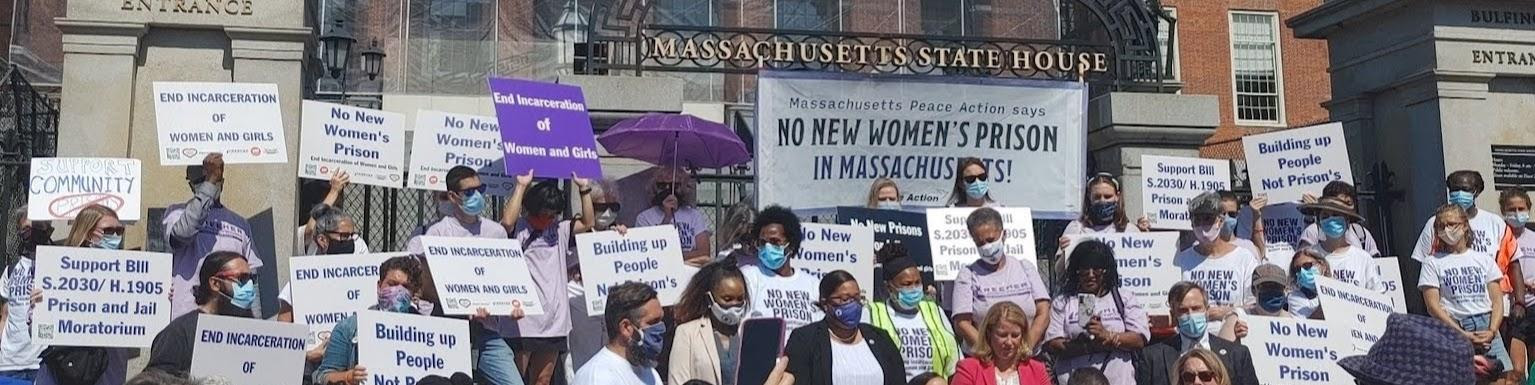
Last session, the MA Legislature passed a moratorium on new prison and jail construction, only for then Republican governor Charlie Baker to veto it.

New session, new opportunity. But time is running short.

The Prison Moratorium bill (S2821), which would put a five-year pause on the construction of new prisons and jails, was reported favorably out of the State Administration and Regulatory Oversight Committee. It needs to get a vote on the floor by next Wednesday.

Families for Justice as Healing is asking that people contact the two Ways & Means chairs in support of this critical bill:

✩ House Chair Aaron Michlewitz

(617) 722-2990

Aaron.M.Michlewitz@mahouse.gov

✩ Senate Chair Michael Rodrigues

(617) 722-1114

Michael.Rodrigues@masenate.gov

Email/call script: “Hello, my name is _______ and I am calling to ask the Chairman to please bring the Prison Moratorium bill S.2821 of Ways and Means to the floor for a vote. Both chambers of the legislature already passed the Prison Moratorium last session, and the State Admin Committee worked hard to clarify the language so it’s even more clear that repairs can still be made for the wellbeing of incarcerated people. Passing the Prison Moratorium is a top priority for me, and this bill is supported by incarcerated people, formerly incarcerated people, community members from all over the state, clergy and faith leaders, public health experts, social workers, and medical providers. Please Pass the Prison Moratorium before the end of the session. Thank you.”


Support families experiencing homelessness and the right to shelter!

On July 23rd, Governor Healey announced changes to the Emergency Assistance (EA) family shelter system that will force children and their families out with no safe place to sleep at night. Families who are deemed eligible for shelter will now be forced to choose: wait in an unsafe place for a shelter placement or stay for 5 nights in a state-run overflow site but then wait at least 6 months to access EA shelter. This policy change will disproportionately impact immigrant families, both new arrivals and long-term Massachusetts residents.

Join our allies from the Massachusetts Law Reform Institute and the Massachusetts Coalition for the Homeless in front of the State House on Monday, July 29th, 11 a.m.–12 p.m. to call on the Governor and Legislature to uphold access to shelter for children and families.

Wanted: Bold Climate Action

Last week, the House took up its climate omnibus bill. While the bill contains a number of important reforms, it lacks the ambition of the Senate’s recent bill, which did far more to accelerate the transition away from gas. And the Senate’s bill still hadn’t gone far enough to meet the moment, especially around environmental justice.

The process in the House was also emblematic of the chamber’s democracy deficit: of 107 amendments filed, 91 were withdrawn, and the handful that were adopted were watered down. What we see time and time again in the MA Legislature is that bad process leads to bad outcomes.

To read more about this, check out blog posts from Jess Nahigian at the Sierra Club and Dan Zackin at 350 Mass.

The Mass Power Forward coalition will be hosting rallies at the State House from through next Wednesday (7/31). You can sign up to join a rally here.

TAKE ACTION: Critical Housing and Climate Policies at Stake

The clock is ticking. The current formal legislative session at the State House ends in just two weeks. And there is a lot still pending.

Take action in support of strong action on our housing crisis and on the climate crisis with the tools and templates below.


The Affordable Homes Act Must Support Renters

WHAT HAPPENED SO FAR: Last month, the MA House and MA Senate passed versions of Governor Maura Healey’s Affordable Homes Act.

Like Healey’s original version of the bill, both bills established an Office of Fair Housing, legalized accessory dwelling units in single-family zoning districts without undue restrictions, streamlined the use of state-owned land for housing, and increased the bond authorizations for public housing, building decarbonization, and many more housing initiatives. Unfortunately, however, both chambers caved to the real estate lobby and axed the widely popular local option real estate transfer fee (which would have allowed cities and towns to raise extra money to invest in affordable housing).

But the two bills had a number of differences, and a Conference Committee of three senators and three representatives are negotiating final details.

WHAT IS AT STAKE: We have a displacement crisis in Massachusetts, and it is essential that the final version of the Affordable Homes Act contain policies to help renters and working-class homeowners:

  • Creating a process for sealing eviction records (Senate bill)
  • Banning brokers’ fees (Senate bill)
  • Establishing a Tenant Opportunity to Purchase local option (House bill)
  • Creating a Foreclosure Mediation Pilot Program (Senate bill)

If we are to make a dent at addressing the affordable housing crisis, we need more investment, we need more housing production, and we need policies to prevent displacement. The Legislature shouldn’t leave out that critical final piece.

WHAT YOU CAN DO: Send an email to the Affordable Homes Act Conference Committee:

  • Senator Lydia Edwards
  • Senator William Brownsberger
  • Senator Peter Durant
  • Representative James Arciero
  • Representative Aaron Michlewitz
  • Representative David DeCoste

You can use the template hereor customize your own email (and then cc your own legislators).


The House Can Strengthen Its Climate Bill

The House will be voting today on its climate omnibus bill (H.4876), which addresses the difficulties of connecting local clean energy projects to the grid.

Take a few minutes to write to your state rep in support of Mass Power Forward priority amendments:

  • Amendment #17 Protecting consumers and communities from new, large gas pipeline expansions (Williams), which would end Energy Facilities Siting Board approval of new, large, polluting gas pipeline expansions which, if constructed, will adversely affect ratepayers, the health and safety of Massachusetts residents, and the climate.
  • Amendment #15 Improving Air Quality in Environmental Justice Communities (Barber), which would create a technical advisory committee for air quality and direct the Department of Environmental Protection to identify at least 8 pollution hot spots, install air monitors there, and provide recommendations for how to reduce air pollution there by 50% by 2030.

Mass Power Forward also has a handy action guide as well that you can use.

Final Weeks of the Legislative Session: Here’s How to Take Action

Three weeks from this Thursday (i.e., August 1st), the MA Legislature will go on break for the rest of the year.

That means that it’s crunch time: all of the policymaking that should have already happened over the pats 18 months will happen in just over three weeks.

That also means that it’s especially important for your legislators to hear from you so that our priorities can cut through the noise.

Read on for an email to your state rep and an email to your state senator to send this week and share.

Thank you for all you do.

In solidarity, Jonathan Cohn
Policy Director
Progressive Massachusetts


Tell Your State Rep: MA Wants Bold Climate Action

This summer has already seen some heat records broken, and we should expect more. Climate change isn’t just an issue for the future; it’s here today, and it’s urgent that our elected officials act with the urgency the situation requires.

On June 25, the Senate passed Bill S.2838, An Act Upgrading the Grid and Protecting Ratepayers. While the bill makes some strides towards dismantling the gas system, it left out key demands of Environmental Justice communities across Massachusetts such as:

  1. A robust cumulative impact analysis tied to siting approval
  2. Ending the expansion of large gas pipelines
  3. Clean indoor and outdoor air

Email your state rep today in support of bold and equitable climate action before the legislative session runs out!

And here’s more: Join the MA Youth Climate Coalition and Mass Power Forward coalitions for a climate justice rally this Saturday at 1 pm at the Boston Common Bandstand.


Tell Your State Senator: Strengthen Privacy Rights

Currently, there is no law in Massachusetts or federally to prevent the sale and purchase of cell phone location data. Every day, companies collect and sell sensitive location information from cell phones, revealing information about where we live, work, and socialize.

Here’s just one example: Politico recently reported that a data broker company tracked people’s visits to nearly 600 Planned Parenthood clinics in 48 states, including Massachusetts. The company sold that data to inform one of the largest anti-abortion ad campaigns targeting specific individuals. If anti-abortion extremists can use cellphone location data to target abortion seekers with ads, they can also use that data to target, harass, or threaten patients and providers in our state.

There is a bill to fix this: the Location Shield Act, which would ban the sale of cellphone location data to protect the privacy and safety of all Massachusetts residents.  

The MA House is planning to vote on a narrowed version of this bill this week. It’s vital that the Senate take up the Location Shield Act so that MA can be a leader on protecting privacy rights.

Can you email your state senator in support?

Climate Organizations’ Priorities for the House Climate Bill

To the 193rd General Court of the Commonwealth of Massachusetts, House of Representatives,

RE: Climate Organizations’ Priorities for the House Climate Bill

The Commonwealth of Massachusetts has made a commitment to environmental justice and to meeting our climate goals in order to ensure a livable planet and a just transition for all. The  Legislature is poised to take a major step towards modernizing the electric grid and promoting the electrification of transportation and buildings. We call on the House of Representatives to take this opportunity to meet critical environmental justice (EJ) goals and to equitably and rapidly transform the gas industry into one that meets the Commonwealth’s climate goals while keeping gas rates down.

The undersigned organizations present elements that must be in this year’s climate bill when it lands on Governor Healey’s desk.

  1. Siting and Permit Approvals tied to a robust cumulative impact analysis. A cumulative impacts analysis (or a reference to it in legislation) will not be meaningful for EJ populations if the analysis is limited to foreseeable impacts related only to the project. In a dramatically streamlined permitting process, like the one envisioned in S.2829, redrafted as S.2838, a cumulative impacts analysis that takes the entire context of a community’s pollution and industrial burden into account is a critical protection for environmental justice communities. A cumulative impacts analysis is not a cure-all or a blanket requirement for a project proponent to redress all of the burdens existing in a host community. It would allow project proponents, decision-makers, and the public to better understand the existing conditions in a host community, weigh the benefits and burdens associated with projects that promote decarbonization of the electricity sector, and ensure that the people living in the communities where that infrastructure is sited are able to benefit from it.
  1. Clean air for environmental justice populations and all. Environmental Justice (EJ) populations — people of color, Indigenous people, low-income people, and limited English proficient speakers— are especially affected by air quality problems. Including air quality policy will improve indoor and outdoor air quality, especially for EJ populations and residents burdened by pollution from congested roadways and ports, gas stoves, and mold in rental housing. Policies should include updating the state sanitary code to require annual mold inspections and create clear timelines for remediating mold in rental housing; Setting and achieving ambitious air pollution reduction targets by 2030 and 2035; Requiring installation of air filters in existing eligible buildings, such as schools, residential buildings with more than 2 tenant-occupied units; Requiring advanced filtration systems (e.g.,MERV 16) for new eligible buildings, such as day care facilities, residential developments, hospitals, schools, long-term care facilities, school aged child care programs, temporary shelters, nursing homes; Expand outdoor air monitoring ultrafine particulate matter and black carbon in pollution hotspots identified by an advisory committee.
  1. End large scale gas pipeline expansion. The Commonwealth’s statutory mandate to reach net zero emissions by 2050 requires an orderly transition to clean  heat for buildings. Every new mile of high pressure pipeline installed is an expensive asset that will have to be paid off over decades by ratepayers or, if stranded, by taxpayers. Stopping the installation of these large scale pipeline expansions (more than 1 mile and more than 100 pounds per square inch), will improve public health and safety and reduce the future financial exposure of ratepayers and taxpayers. 
  1. Put gas companies on a path to provide clean, non-emitting renewable energy rather than fossil gas that leaks methane into the atmosphere and into our homes and businesses. Heating and cooling buildings contributes a third of the Commonwealth’s greenhouse gas emissions, mostly a result of burning gas. There are several important changes the Legislature can make to accelerate this transition to clean, non emitting energy.:
  1. Change the definition of gas company to allow  gas companies to sell non-emitting renewable thermal energy, such as networked geothermal systems. These systems are six times more efficient than conventional gas burners for heating buildings.
  2. Limit the expansion of new gas mains unless there are no feasible alternatives to gas that can provide substantially similar service, taking into account the public interest in meeting greenhouse gas emission reduction mandates and in avoiding stranded assets, the cost of which will be borne by ratepayers.
  3. Permit gas companies to meet their “obligation to serve” by providing customers with adequate non-emitting renewable substitutes.
  4. Reform the current program (called GSEP) to encourage gas companies to repair or retire leak-prone pipelines, rather than replacing pipes that are projected to cost ratepayers some $34 billion between 2022 and 2039.  We should instead encourage gas companies to install non-emitting renewable sources of energy such as ground source heat pumps connected through  networked geothermal systems.
  5. Require gas companies to plan and implement an orderly, safe transition to non-emitting energy for heating buildings.
  1. Other Important Policies From Frontline Communities
    1. Require the MBTA to electrify the entire commuter rail system: The Massachusetts Bay Transportation Authority should be required to develop and implement short-term, medium-term and long-term plans for each line of the commuter rail system, ensuring that the line is fully integrated into the Commonwealth’s transportation system and designed to make the system more productive, equitable and decarbonized. 
    2. Remove woody biomass from the alternative energy portfolio standard: Limiting the eligibility of woody biomass as an alternative energy supply removes ratepayer funded subsidies for toxic woody biomass by excluding large and intermediate-sized wood heating units from qualifying for credits through the Alternative Portfolio Standard (APS) and  is consistent with Governor Healey’s campaign platform. 
    3. Removing woody biomass from the greenhouse gas emissions standard for municipal lighting plants would close the “biomass loophole” for Municipal Light Plants (MLPs).  Last session, the legislature removed biomass power plants from qualifying for the Renewable Portfolio Standard (RPS), with the passage of An Act Driving Clean Energy and Offshore Wind.  Because the RPS does not apply to municipal light plants , incentives remain for developers to build and operate wood-burning power plants in the Commonwealth, using ratepayer “clean energy” subsidies, or even to purchase biomass energy from other New England states. 
    4. Establish Labor Standards and Reporting for Clean Energy Procurement: A special commission charged with assessing the  impacts on the fossil fuel workforce caused by public or private efforts to reduce greenhouse gas emissions or transition from fossil fuels to clean energy will provide us with the necessary information to develop labor standards and to make thoughtful decisions to achieve a just transition to clean energy. 

These additions expand the impact of the pending climate bill, from a necessary expansion of the electric grid itself (crucial to bringing in the thousands of megawatts of renewable electricity we need) to ensure that Environmental Justice populations are not overburdened and to protect gas customers and taxpayers from the ballooning costs of maintaining an expensive and dangerous gas system that will soon be obsolete.  We hope the House will show strong support for environmental justice and rapid decarbonization, and adopt these recommendations.

The following organizations comprising most of the members of the MA Environmental Justice Table, Mass Power Forward coalition and Gas Transition Allies:

  1. 350 Central Mass
  2. 350 Mass of Greater Lowell
  3. 350 Mass
  4. 350 Mass Boston
  5. 350 Mass Berkshire Node
  6. 350 Mass Newton Node
  7. 350 Mass North Shore
  8. All In Energy
  9. Alternatives for Community & Environment (ACE)
  10. Andover WECAN
  11. Arborway Coalition
  12. Arise for Social Justice
  13. Becket Energy Committee
  14. Berkshire Environmental Action Team
  15. Boston Clean Energy Coalition 
  16. Boston Climate Action Network (BCAN)
  17. Boston Green Action
  18. Boston Harbor Storm Surge Working Group
  19. Boston Teachers Union Climate Justice Committee, Steering Committee*
  20. Breathe Easy Berkshires
  21. Brimmer and May Environmental Club
  22. Brookhaven Residents’ Climate Change Committee
  23. Canton Democratic Town Committee 
  24. Canton Sustainable Equitable Future
  25. Cape Ann Climate Coalition Organizing Committee
  26. Centro Presente
  27. Chase Systems
  28. Citizens’ Climate Lobby, Mass. North Shore Chapter
  29. Citizens Climate Lobby South Shore & Cape chapter
  30. Clean Water Action Massachusetts
  31. Climate Action Group, the Unitarian Society of Northampton and Florence
  32. Climate Action Now Western Mass
  33. Climate Code Blue
  34. Climate Reality Project Boston Metro chapter
  35. Climate Reality Project Massachusetts Southcoast
  36. Coalition For Social Justice
  37. Conservation Law Foundation
  38. Elders Climate Action Mass chapter
  39. Energy Allies
  40. Fairmount Indigo CDC Collaborative (FICC)
  41. First Parish Unitarian Universalist of Arlington Climate Action Working Group
  42. First Parish in Bedford
  43. First Parish in Cambridge
  44. First Parish of Concord Environmental Team
  45. First Unitarian Universalist Society in Newton Climate Action Task Force
  46. Food & Water Watch
  47. Fore River Residents Against Compressor Station (FRRACS)
  48. Franklin County Continuing the Political Revolution- Climate Crisis Task Force
  49. Greater Boston Physicians for Social Responsibility
  50. Green Energy Consumers Alliance
  51. Green Newton
  52. Green Sanctuary Committee of FPUU Medfield
  53. GreenRoots
  54. H.E.R.O. Nurturing Center Inc
  55. HEET
  56. HEETlabs
  57. Jewish Climate Action Network
  58. Lexington Climate Action Network (LexCAN)
  59. LISC Massachusetts
  60. Longmeadow Pipeline Awareness Group
  61. Massachusetts Climate Action Network
  62. Massachusetts Interfaith Power & Light, Inc.
  63. Massachusetts Youth Climate Coalition
  64. Melrose UU Church Climate Action Team
  65. Mothers Out Front Acton
  66. Mothers Out Front Amherst
  67. Mothers Out Front Arlington
  68. Mothers Out Front Bedford Chapter
  69. Mothers Out Front Brookline
  70. Mothers Out Front Cambridge
  71. Mothers Out Front Concord
  72. Mothers Out Front Downtown Boston
  73. Mothers Out Front East Boston
  74. Mothers Out Front Jamaica Plain
  75. Mothers Out Front Massachusetts
  76. Mothers Out Front Medford 
  77. Mothers Out Front Newton
  78. Mothers Out Front Northampton
  79. Mothers Out Front Somerville
  80. Mothers Out Front Waltham
  81. Mothers Out Front West Roxbury/Roslindale/Hyde Park chapter
  82. Mothers Out Front Winthrop
  83. Mt. Hope Canterbury Neighborhood Association
  84. Mystic Valley Progressives
  85. No Fracked Gas in Mass
  86. North Parish UU Climate Justice Group
  87. Our Climate
  88. Our Revolution MA (ORMA) Climate Crisis Working Group
  89. Partnership for Policy Integrity
  90. Pipe Line Awareness Network for the Northeast
  91. Progressive Massachusetts
  92. Renewable Renegades
  93. Resist the Pipeline
  94. Resonant Energy
  95. Sierra Club Massachusetts
  96. Slingshot
  97. South Coast Neighbors United
  98. Speak for the Trees, Boston
  99. Springfield Climate Justice Coalition
  100. Springfield No One Leaves
  101. Sunwealth
  102. Sustainable Wellesley
  103. The Enviro Show
  104. Third Act Massachusetts
  105. Trustees Collaborative for Parks & Open Space
  106. Union of Concerned Scientists
  107. Unitarian Universalist Association of Greater Springfield
  108. Unitarian Universalist Mass Action
  109. Vote Solar
  110. Watertown Faces Climate Change (a node of 350Mass)
  111. Worcester Congregations for Climate and Environmental Justice
  112. ZeroCarbonMA

MA Senate Passes Climate Omnibus Bill 38 to 2. Here’s What’s in It.

On Tuesday, the MA Senate voted 38 to 2 to pass its climate omnibus bill (An Act upgrading the grid and protecting ratepayers). The 2 NO votes coming from Republicans Peter Durant of Spencer and Ryan Fattman of Sutton. 

Here are some of the key parts of it.

Siting Reform

  • Establishes a fund to support individuals, local governments, and community organizations seeking to intervene in the siting regulatory process (formally known as “intervenors”), a Division of Public Participation within the Department of Public Utilities, and an Office of Environmental Justice and Equity
  • Creates a consolidated permitting process under the Energy Facilities Siting Board (as opposed to a series of permits across local, regional, and state levels) for various clean energy projects and limits the review process to one year for smaller projects and 15 months for larger projects
  • Requires any electric company, distribution company, generation company, transmission company or natural gas pipeline company to petition the Energy Facilities Siting Board when it seeks to take land via eminent domain
  • Requires the facility siting division within the Department of Public Utilities to maintain a clean energy infrastructure dashboard

Moving Beyond Gas 

  • Allows gas companies to provide networked geothermal energy 
  • Requires the Department of Utilities to consider the public interest (such as achieving greenhouse gas reduction goals) and the availability of non-gas alternatives when evaluating proposals from gas companies to expand territory and petitions from individuals for gas service. 
  • Requires gas companies to file plans with the Department of Public Utilities on  decommissioning gas infrastructure and remedying leak-prone infrastructure
  • Repeals the gas system expansion mandate at the DPU (i.e., the requirement that gas companies design programs “which increase the availability, affordability and feasibility of natural gas service for new customers” 

Electrification of Transportation 

  • Makes it easier for cities and towns to procure electric school buses and EV charging equipment for their municipalities
  • Authorizes $27M from the RGGI Auction Trust Fund to be made available for the Electric Vehicle Adoption Incentive Trust Fund for the next three fiscal years
  • Prohibits a historic district commission, board of a neighborhood conservation district, or condo association from prohibiting or unreasonably restricting an individual unit owner from installing electric vehicle supply equipment.
  • Requires the MBTA to develop short-term, medium-term, and long-term plans to electrify the commuter rail (Amendment #31) 

Building Decarbonization 

  • Directs the Division of Capital Asset Management and Maintenance to evaluate the potential of increasing energy efficiency and reducing greenhouse gas emissions in all buildings owned or leased by the Commonwealth
  • Expands the mission of the Board of Building Regulations to include energy efficiency, reducing greenhouse gas emissions, and reductions in embodied carbon

Consumer Protection

  • Prohibits competitive electric suppliers, which frequently engage in predatory business practices, from signing up new residential customers,
  • Requires the Department of Public Utilities to establish discounted rates for moderate-income consumers with distribution companies

Defining Clean Energy 

  • Positive: Removes the designation of biomass as clean energy for Municipal Light Plant clean energy standards (Amendment #34) 
  • Negative: Expands the definition of “clean energy” to include nuclear, carbon dioxide removal, hydrogen, renewable natural gas and includes carbon capture & sequestration in clean energy research

Just Transition

  • Creates a commission to examine ways to increase access to employment, training, and workforce opportunities in clean energy industries and related fields for gas workers (Amendment #120) 

Other Measures

  • Updates the state’s bottle bill to expand the types of beverage containers that have a deposit, to cover water bottles, iced teas, fruit juices, and more (Amendment #67)

Unfortunately, several of the amendments we supported to strengthen the bill were withdrawn:

  • #14 Protecting the Commonwealth from Gas Expansion (Gomez), which would halt large gas infrastructure expansion projects from being approved by the Energy Facilities Siting Board (EFSB).
  • #15 Halting the Expansion of Large Gas Pipes (Gomez), which would stop the Department of Public Utilities (DPU) from approving gas companies to expand into new towns & cities not already served by gas.
  • #16 Protecting the Climate and Ratepayers from Gas Expansion (Gomez), which would halt both large gas infrastructure expansions approvals by the EFSB (Amendment 14) and gas territory expansions by the DPU (Amendment 15).
  • #100 Improving Outdoor Air Quality (Jehlen), which would create a technical advisory committee for air quality, direct the DEP to identify at least 8 pollution hot spots, install air monitors, and reduce the air pollution by 50% by 2030.
  • #106 Stemming the Expansion of RNG and Hydrogen (Eldridge), which would stop RNG and Hydrogen as being defined as clean energy.
  • #119 Prevailing Wage (Feeney), which would bring natural gas, electrical, and renewable energy utility workers under the Commonwealth’s prevailing wage statute to make it harder for work to be outsourced to low-road employers.

And several were voted down in quick, perfunctory voice votes with no accountability:

  • #28 Zero Carbon Renovation Fund (Gomez), which would provide funding for the decarbonization measures we need across sectors to meet Massachusetts’ ambitious climate goals.
  • #35 Limiting Biomass (Gomez), which would remove subsidies for burning biomass.
  • #57 Clean Energy Siting and Permitting, Local Option Amendment (Mark), which would make the consolidated permit a local option (like stretch code).
  • #116 Accurately Assessing Community Impacts (DiDomenico), which would strike a clause from the definition of cumulative impact analyses that would limit the analysis to only assessing the risks and exposures attributable to the proposed new pollution source 
  • #119 Prevailing Wage (Feeney), which would bring natural gas, electrical, and renewable energy utility workers under the Commonwealth’s prevailing wage statute to make it harder for work to be outsourced to low-road employers.

Progressive Mass Western Norfolk County Co-hosts Canvasser’s Training

By Sue Savoy, Progressive Mass Western Norfolk County

On Saturday, May 4th Progressive Mass Western Norfolk County co-hosted a Canvasser’s Training at the Norfolk Public Library.  The event was co-hosted by the Bellingham, Franklin, Medfield, Milford, and Plainville Democratic Town Committees.  Justin Bates of Progressive Mass Salem provided a dynamic training, inspiring local activists to knock doors this election season and beyond. Justin Bates was the campaign manager for State Senator Becca Rausch’s successful 2022 run for the State House.  Twenty-two people attended the training.

Justin called upon participants to understand the barriers to canvassing as well as to consider personal ideals when preparing to knock on doors for candidates and political issues.  In today’s divisive political climate, many folks reported being nervous about going door to door.  However, targeted planning can result in energizing and positive results, especially when planners design turfs to include friendly doors based on voting history.  Door knocking is a time tested and highly effective strategy for energizing voters.  For example during the Freedom Summer of 1964, door knocking was a central tactic used by civil rights activists, many of them college students, to register black Missisipians to vote.  Participants of the canvasser training took time to share their personal stories in small working groups.  Folks talked about what brought them to activism.  They then reflected upon their most important values that led them to the training, and finally practiced crafting their canvassing messages leading with those values.  

Kevin Kalkut of Norfolk, candidate for 9th Norfolk State Representative shared the importance of canvassing to make personal connections with voters to inspire them to vote on election day. 

Participants reported feeling excited to hit doors following the training.  Leading with personal values is a potent way to get empowered and send a clear message to voters about the issues we care about.  After the training several of the attendees spent the afternoon knocking on doors for a progressive school committee candidate. 


JP Progressives hold Climate Action Forum

By Enid Eckstein, JP Progressives

Climate change has long been a concern of Jamaica plain residents.  With this in mind, JPP sponsored “Action for Climate Change at the Local, State and National Level” forum on April 30.  Moderated by Kendra Lara, former JP City Councilor, the panel included panelists Hassann Farooqi of Boston Climate Action NetworkRoseann Bongiovanni of GreenRootsElizabeth Tamton from Mothers Out Front, and our special guest Gina McCarthy, former administrator of the Environmental Protection Agency and the first-ever White House national climate advisor.

Gina McCarthy addressed the big picture of national policy and some of the accomplishments of the Federal government including the infrastructure investments of the Inflation Reduction Act but stressed “the ball starts rolling at the local level and it is the organization of the every bodies that makes change”.  Roseann Bongiovanni emphasized the importance of environmental justice and this is the time to recognize many of the systemic changes necessary.  Hassann Farooqi outlined the importance of enforcement of the new Building Emissions Reduction and Disclosure Ordinance which sets requirements for large existing buildings to reduce their greenhouse gas emissions over time.  Elizabeth Tanton outlined a number of the Mothers Out Front campaigns including the move away from gas infrastructure, fighting gas leaks and the effort to reduce school building indoor pollution.  

When asked at the end, what gives you hope for the future and what should JPers do to address climate change, Hassann Farooqi urged people to “get involved, vote and sign up,  for Community Choice Electricity, which gets its energy from renewable sources”.  Elizabeth Tamton, urged participants to  “get mobilized and stay mobilized, and be part of an environmental justice movement by partnering with various organizations”.  Gina McCarthy talked about the importance of engaging and “pulling up your pants and move and together and we will win”.  Roseann Bongiovanni urged  people “join an organization, support legislation, contact elected officials, volunteer and listen, and center equity into every conversation and uplift the voices of those most impacted”.  All speakers stressed a belief in young people’s involvement and the importance of action.

Happy Earth Day! Here’s How to Take Action Today and Beyond

Happy Earth Day!

Earth Day serves as a reminder of the fragility and interconnectedness of our planet and how much more we need to do to protect our common home.

A few years ago, Massachusetts set a commitment to achieving net-zero greenhouse gas emissions by 2050. For us to meet that goal (or a more ambitious one), then we need bold and comprehensive action on climate from our state legislature. 

That means putting a pause on new gas infrastructure so that we aren’t building new pipelines and compressor stations that create a lock-in effect for fossil fuels and divert time, attention, and resources away from a plan for a just transition.

And that means reforming our energy siting process to expedite the siting of renewable energy and to ensure that we are centering equity and not reproducing historic environmental justices.

Can you write to your state legislators today about the importance of taking action on climate this session?