Testimony: Our Youth Deserve Second Chances

Tuesday, November 18, 2025

Chair Day, Chair Edwards, and Members of the Joint Committee on the Judiciary: 

Progressive Massachusetts is a statewide, multi-issue, grassroots membership organization focused on fighting for policy that would make our Commonwealth more equitable, just, sustainable, and democratic. We urge you to give a favorable report to H.1923: An Act to Promote Public Safety and Better Outcomes for Young Adults and H.2051 / S. 1087: An Act to End Lifetime Parole for Juveniles and Emerging Adults. 

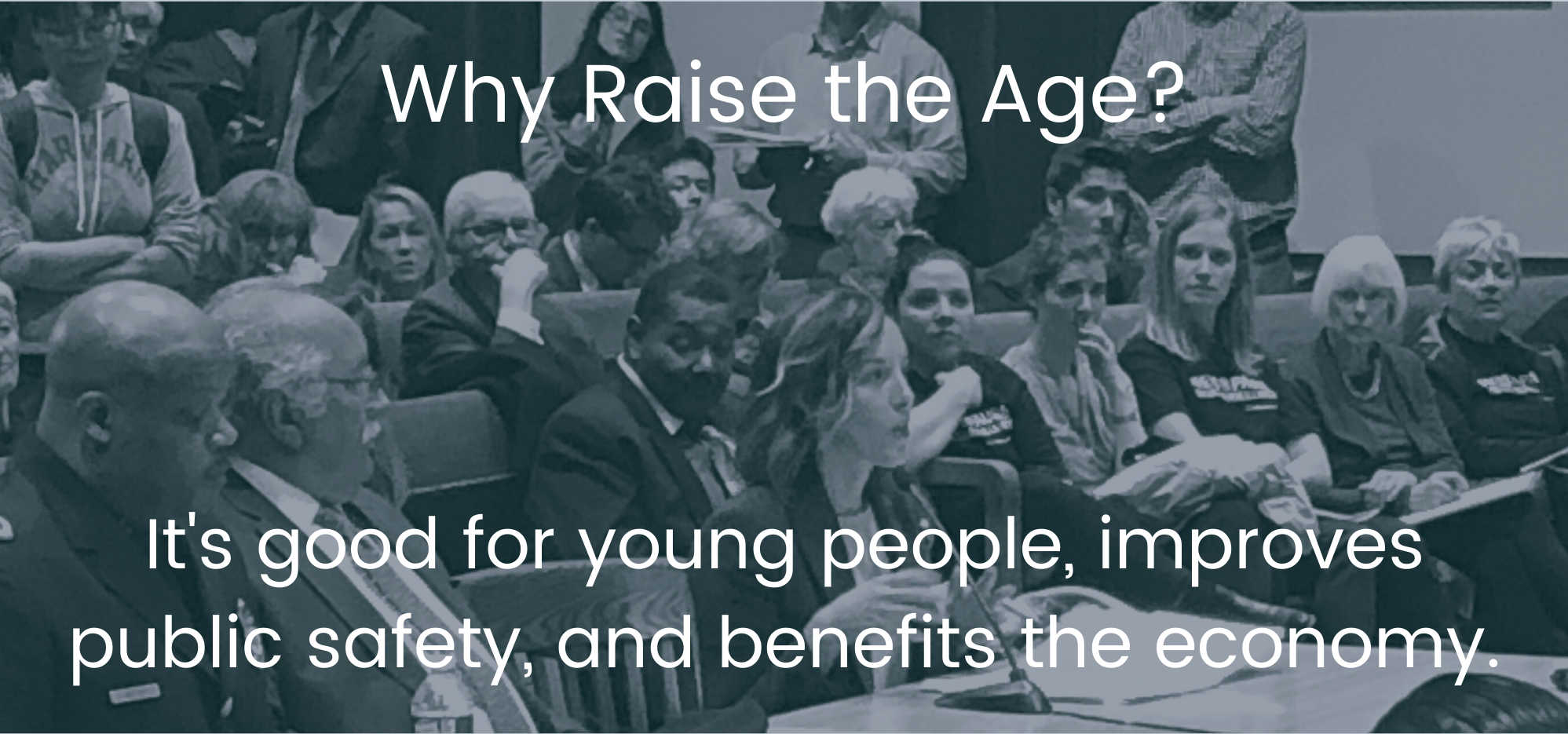
A decade ago, Massachusetts raised the age of juvenile court to keep 17-year-olds out of the adult system. Supporters of this reform argued that keeping young people out of the adult criminal system would reduce recidivism. The data is in: they were right. Juvenile crime has declined, and Massachusetts has seen faster declines in violent and property crime rates than the national average. 

It’s time to build on that success by raising the age to 21, as this bill would do. Young people are highly influenced by their environments: it is no surprise then that adult jail and prison environments increase offending behavior. By contrast, in the juvenile system, adolescents have better access to educational and mental health resources that are critical to rehabilitation and successful re-entry, as well as stricter supervision.

Mass incarceration policies have hit communities of color in Massachusetts especially hard. As a criminal sentence too often closes off educational and employment opportunities, our criminal legal system perpetuates racial inequalities. A focus on rehabilitation would give youth a better chance to grow up and contribute in their community and, by doing so, would help reduce intergenerational poverty. When our criminal legal system centers human dignity, rehabilitation, and accountability, rather than punishment and vengeance, we are all safer and healthier in the long run.

As the framing of today’s committee  implies, this bill would mean better access to health care and other supports. However, we want to underscore that merely improving the adult prison system—a task desperately needed and which other bills heard today would do—is not sufficient to address the issues at stake here. Federal and state protections differ, as do long-term legal consequences. 

Similarly advancing these priorities, H.2051 / S. 1087 would address the current situation where youth aged 14 to 21 can face lifetime parole after 15 years in prison. This is costly to the parole system and is ineffective toward achieving stated goals of safety or rehabilitation. We know, through a significant body of research, that most youth will “age out” of offending behavior, and the parole system, which imposes sanctions on parolees for a long list of minor infractions, harms their ability to get back on their feet. 

Sincerely, 

Jonathan Cohn 

Policy Director 

Progressive Massachusetts

Testimony: DOC’s Policies Should Reflect Its Stated Mission

Thursday, October 16, 2025 

Chair Cronin, Chair Cahill, and Members of the Joint Committee on Public Safety: 

I am submitting testimony on behalf of Progressive Massachusetts. PM is a statewide, multi-issue, grassroots membership organization focused on fighting for policy that would make our Commonwealth more equitable, just, sustainable, and democratic. 

We urge you to give a favorable report to the bills from the Dignity and Freedom Platform

  • An Act to build restorative family and community connection (Visitation Bill) (S.1720/H.2591) 
  • An Act Relative to Medical and Elder Parole (S.1722/H.2693) 
  • An Act relative to human rights and improved outcomes for incarcerated people (Human Rights Bill) (S.1651/ H.2608)  
  • An Act creating an independent correctional oversight office to facilitate the recommendations of the Special Legislative Commission on Structural Racism in Correctional Facilities of the Commonwealth (REICI race data and oversight bill) (S.1725/H.2636)

The Department of Correction’s website states as its mission to provide “custody, care, and programming for those under our supervision to prepare them for safe and successful reentry into the community.” However, many existing practices run fully counter to such a stated goal. 

Visitation Bill (S.1720/H.2591)

In 2018, the DOC passed severe restrictions on visitation rights. These included limiting the number of individuals on a pre-approved visitor list and the number of times said list can be changed each year, creating a burdensome application for visitors, imposing strict dress codes, and limiting the number of individuals anyone can visit.

Visitation is crucial to the well-being of families, children, incarcerated individuals, and even prison employees. Research has shown that visitation is an effective strategy in reducing recidivism and thereby enhancing public safety. Children of incarcerated parents are less likely to be incarcerated themselves if they visit their incarcerated parents. Visits help incarcerated individuals maintain relationships in their outside community which makes re-entry into the community much more likely to be successful.

Given that visitation enhances public safety, reduces recidivism, and promotes rehabilitation, our prisons and jails should be fostering the maintenance and growth of positive bonds between incarcerated individuals and their friends, family, and broader community—not limiting these relationships.

Elder and Medical Parole  (S.1722/H.2693) 

Despite our comparatively low incarceration rate by US standards,, we are tied with New Hampshire for the highest proportion of incarcerated people over the age of 55 in the country, who experience significantly worse health outcomes than people outside of prison. 

Moreover, older incarcerated individuals are significantly less likely to cause harm when released from incarceration. We are warehousing people as they get older and sicker in ways that make no one safer. 

Moreover, one driver of our comparatively old prison population is that, in recent years, MA has reformed our criminal legal system and moved away from the mistakes of the past. But many Black and Brown people still carry the burden of unnecessarily harsh sentencing laws in the “war on drugs” era. 

Human Rights Bill (S.1651/ H.2608) 

Again, if the DOC understands that its mission is to prepare people for successful re-entry, then its practices and policies should be better oriented toward that goal. This bill recognizes that and would establish universal access to programming, education, and vocational training opportunities, as well as meaningful and productive out of cell time. If we want to cultivate a culture of respect and growth outside the walls, we need to cultivate that inside too. 

Independent Correctional Oversight (S.1725/H.2636)

The Special Legislative Commission on Structural Racism in Correctional Facilities of the Commonwealth documented what is widely known: that structural racism is rampant in our carceral system. A lack of transparency and accountability reinforces this and allows it to worsen. An independent oversight office is long overdue. 

Let’s recognize the value of rehabilitation and reentry and our align systems in support, rather than around creating new cycles of harm. 

Sincerely, 

Jonathan Cohn 

Policy Director 

Progressive Massachusetts 

Raising the Age is Good for Safety, Good for the Economy, and Good for Our Future

Tuesday, September 23, 2025

Chair Edwards, Chair Day, and Members of the Joint Committee on the Judiciary:

Progressive Massachusetts is a statewide, multi-issue, grassroots membership organization focused on fighting for policy that would make our Commonwealth more equitable, just, sustainable, and democratic. We urge you to give a favorable report to S.1061: An Act to Promote Public Safety and Better Outcomes for Young Adults.

A decade ago, Massachusetts raised the age of juvenile court to keep 17-year-olds out of the adult system. Supporters of this reform argued that keeping young people out of the adult criminal system would reduce recidivism. The data is in: they were right. Juvenile crime has declined, and Massachusetts has seen faster declines in violent and property crime rates than the national average. 

It’s time to build on that success by raising the age to 21, as this bill would do. Young people are highly influenced by their environments: it is no surprise then that adult jail and prison environments increase offending behavior. By contrast, in the juvenile system, adolescents have better access to educational and mental health resources that are critical to rehabilitation and successful re-entry, as well as stricter supervision.

Mass incarceration policies have hit communities of color in Massachusetts especially hard. As a criminal sentence too often closes off educational and employment opportunities, our criminal legal system perpetuates racial inequalities. A focus on rehabilitation would give youth a better chance to grow up and contribute in their community and, by doing so, would help reduce intergenerational poverty. When our criminal legal system centers human dignity, rehabilitation, and accountability, rather than punishment and vengeance, we are all safer and healthier in the long run.

Sincerely,

Jonathan Cohn

Policy Director

Progressive Massachusetts

Testimony in Support of Road to Opportunity Act

July 8, 2025

Chair Crighton, Chair Arciero, and Honorable Members of the Joint Committee on Transportation:

My name is Jonathan Cohn, and I am the Policy Director of Progressive Massachusetts, a statewide grassroots advocacy group with chapters across the state committed to fighting for an equitable, just, democratic, and sustainable Commonwealth.

We urge you to give a favorable report to H.3662 and S.2368, An Act to increase opportunity by ending debt-based driving restrictions, also referred to as the Road to Opportunity Act. This bill would end debt-based driving restrictions that irrationally punish people who can’t pay outstanding fines and fees.

Being poor in the United States is expensive, and debt-based driving restrictions are but one of many examples. When someone’s license is suspended because they are unable to afford to pay off their fines and fees, they are placed in an impossible situation. If they stop driving, they might lose access to job opportunities that they need to pay the fine. If they continue driving, then they risk further punishment. Driving on a suspended license is a misdemeanor in Massachusetts; it can result in a jail sentence or immigration consequences, an extended period of license suspension, and even more fines. A second offense carries a mandatory minimum jail sentence of 60 days’ incarceration. On top of all of this is the lasting harm done by having a criminal record, which can become a roadblock to housing and job opportunities for years to come.

The status quo exacerbates racial inequalities. Because communities of color are over-policed and disproportionately targeted for enforcement of minor infractions and crimes, research shows that they also disproportionately experience debt-based license suspensions.

Not being able to pay a fine does not make someone a reckless driver. The bill leaves in place license suspensions for unsafe driving, where a public safety interest exists. But no one is made safer by criminalizing poverty.

License suspensions for unpaid debts do not work as a pressure tactic and don’t succeed at bringing in revenue, and it’s no surprise why: if someone doesn’t have to pay the money for the fine, increased punishments won’t make that money magically appear. The only thing that such punishment manifests is more harm and lost opportunity.

Over half of states across the country—red, blue, and purple—have passed legislation to eliminate or significantly curb debt-based license suspensions. We urge you to add Massachusetts to this growing list of states by voting H.3662 and S.2368 out of committee favorably and supporting its prompt passage.

Sincerely,

Jonathan Cohn

Policy Director

Progressive Massachusetts

Take Action: Here’s What Government Efficiency Actually Looks Like

We’ve heard a lot about “government efficiency” over the past few months.

Whenever Donald Trump, Elon Musk, or any of their lackeys in Congress use it, they are using code words for cutting valuable programs that serve the public, as opposed to corporate profit.

But there is an actual meaning to the word. Here’s an example.

Our criminal record sealing system is stuck in the last century.

Individuals seeking to seal records need to mail or deliver petitions to the Commissioner of Probation who processes them manually, one-by-one. This creates backlogs, with several months passing before people hear back when they have already waited years for the opportunity.

Moreover, many people do not know when their records are eligible for sealing, and only learn they might be eligible for record sealing after they lose the prospect for a job, housing, or other opportunity due to their record.

Record sealing has well-documented benefits, but these benefits in economic opportunity are only possible if people can get their records sealed.

That’s why we’re a strong supporter of Clean Slate legislation that would create an automated record sealing process. Automating record sealing means fewer bureaucratic obstacles and more opportunity. It’s a win-win.

We testified at the State House on Tuesday in support of the Clean Slate bill. Can you write to your legislator today too?

Wanted: Strong Climate Legislation Before the Year Is Over

Although the Legislature left formal session with much work undone on August 1st, the 193rd session of the Legislature is not over for a few more months.

Your legislators still need to hear from you about the bills still under negotiation. Read on for two actions to take over the next week.


Wanted: A Robust Climate Bill

When the Legislature left formal session two months ago, they left without consensus on climate legislation. Let’s be clear: it’s not acceptable for the Legislature to go this entire session without passing any new, robust legislation to address the climate crisis. We need legislation, and that legislation must meet the moment.

As 100+ climate organizations recently said in a letter, “We cannot accept a narrow siting and permitting bill that does not do enough for climate justice, reducing climate pollution, or protecting ratepayers as the outcome of 18 months of the legislative process.

A robust climate bill MUST include the following:

  • Siting reform that centers environmental justice. Environmental justice communities have suffered the historic burden of pollution from our energy system, and we need to ensure that new facilities do not compound these inequities. The definition of cumulative impact analysis (i.e., the calculation of that historic burden of pollution) in the Governor’s H.5049 is the most accurate and complete definition introduced this session and should be the one used in a final bill that includes siting and permitting reform.
  • Measures to end large-scale gas pipeline expansion and increase the use of non-emitting thermal networks. The legislature must act immediately to ramp down the expansion of gas infrastructure and put gas companies on a path to provide clean, non-emitting renewable energy rather than fossil gas that leaks methane and air pollution into the atmosphere and into our homes and businesses, costing ratepayers significant sums of money.

Take a few minutes to write to your state legislators in support of coming back into formal session and passing a robust climate bill.


Call Your State Representative about Raise the Age

In July, the Senate voted, as part of their economic development bill, to increase the age of juvenile jurisdiction to include 18-year-olds—keeping high school seniors out of the adult prison system.

The House did not include this important language, and a Conference Committee of three state senators and three state representatives have been negotiating the differences between the two bills.

Let’s keep up the drumbeat for critical juvenile justice reforms.

Tell your Representative that: (1) Raise the Age is an economic development policy and (2) urge the Economic Development Bill conferees to include Raise the Age in the final bill:

Step 1: Find your State Representative

Step 2: Call your legislator with this sample script:

My name is _________, and I am a constituent of Representative _______. I ask that the Representative reach out to the Economic Development bill conferees, Chair Parisella, Chair Michlewitz, and Rep. Muradian expressing the Representative’s support for including Raise the Age as passed in S.2869 in the final Economic Development bill.

Subjecting 18-year-olds to adult prosecution, CORI records and adult incarceration causes significant harm not only to the teens themselves but to our economy which is desperate for more – not less – young people to participate in the workforce.                  

Follow up with an email:  Find a template here.

The Legislative Session Isn’t Over Yet.

Although the formal period of the legislative session ended on July 31, the MA Legislature is still in session for 3.5 months. And their work isn’t done.

Let’s make sure that the Legislature and Governor Healey hear that.


Call Your State Representative about Raise the Age

In July, the Senate voted, as part of their economic development bill, to increase the age of juvenile jurisdiction to include 18-year-olds—keeping high school seniors out of the adult prison system.

The House did not include this important language, and a Conference Committee of three state senators and three state representatives have been negotiating the differences between the two bills.

Let’s keep up the drumbeat for critical juvenile justice reforms.

Tell your Representative that: (1) Raise the Age is an economic development policy and (2) urge the Economic Development Bill conferees to include Raise the Age in the final bill:

Step 1: Find your State Representative

Step 2: Call your legislator with this sample script:

Subjecting 18-year-olds to adult prosecution, CORI records and adult incarceration causes significant harm not only to the teens themselves but to our economy which is desperate for more – not less – young people to engage in our economy.

My name is _, and I am a constituent of Representative _. I ask that the Representative reach out to the Economic Development bill conferees, Chair Parisella, Chair Michlewitz, and Rep. Muradian expressing the Representative’s support for including Raise the Age as passed in S.2869 in the final Economic Development bill.

Follow up with an email: Use the email tool at https://www.raisetheagema.org/take-action

Join Mass Power Forward to Tell Gov. Healey Not to Kick the Climate Can Down the Road!

Join Mass Power Forward at the State House to call on Governor Healey to not kick the climate can down the road. We must stop expanding the for-profit gas utility system, and right now Governor Healey is proposing a flimsy climate bill with no plan for ending the expansion.

WHAT: Press Conference and Action
WHERE: Meet at Nurse’s Hall, 2nd Floor of the Boston Statehouse
WHO: You and your friends
WHEN: Tuesday, Sept. 24th at 12pm

RSVP Here

The Best Day to Contact Your Legislator is Yesterday. The Next Best Is Today.

The best time to contact your legislators is yesterday. The second best time is today.

That’s because time is short. The current legislative session will wrap up next Wednesday, and major decisions will be made between now and then.

As I noted in Monday’s update, this email will be longer than I’d like. That’s because our Legislature, despite being a full-time body, has the tendency to push off everything to the last month, last weeks, even last day of the legislative session. The public deserves a better process, and I’m sure most legislators would prefer one too.

But we wanted to keep you in the loop about what’s happening and what you can do. There will be an array of actions you can take: make a plan to choose at least one action step, and talk to friends about it.

Here’s what you can do:

  • Email your state rep in support of Raise the Age
  • Email the Affordable Homes Act Conference Committee
  • Email the Climate Bill Conference Committee
  • Email the Ways & Means chairs about the Prison Moratorium
  • Show up on Monday in support of families experiencing homelessness

Make sure to check out our blog for other updates, and stay tuned for action steps. Many bills move quickly at the end of the session (Example: We just learned that the Senate is taking up an important maternal health bill next Tuesday.) In solidarity,
Jonathan Cohn
Policy Director

Progressive Massachusetts


Email to Your State Rep: Raise the Age

On July 11, during the debate on its economic development, the MA Senate voted 31 to 9 to keep 18-year-olds out of the adult prison system.

Shifting legal system-involved youth from the adult criminal legal system into the juvenile system improves young people’s access to education and skills training, even if they are never incarcerated. Young people’s prosecution as adults during their late adolescence derails their education, which can have serious effects on their ability to attain employment during these critical adolescent years, diminishing their lifetime earnings, and preventing them from contributing fully to the Massachusetts economy.

The economic development bill is now in Conference Committee, where three senators and three representatives will negotiate a final bill. Here’s what you can do:


Email the Affordable Homes Act Conference Committee

Last month, the MA House and MA Senate passed versions of Governor Maura Healey’s Affordable Homes Act.

WHAT HAPPENED: Like Healey’s original version of the bill, both bills established an Office of Fair Housing, legalized accessory dwelling units in single-family zoning districts without undue restrictions, streamlined the use of state-owned land for housing, and increased the bond authorizations for public housing, building decarbonization, and many more housing initiatives. Unfortunately, however, both chambers caved to the real estate lobby and axed the widely popular local option real estate transfer fee (which would have allowed cities and towns to raise extra money to invest in affordable housing).

But the two bills had a number of differences, and a Conference Committee of three senators and three representatives are negotiating final details.

WHAT IS AT STAKE: We have a displacement crisis in Massachusetts, and it is essential that the final version of the Affordable Homes Act contain policies to help renters and working-class homeowners.

  • Creating a process for sealing eviction records (Senate bill)
  • Banning brokers’ fees (Senate bill)
  • Establishing a Tenant Opportunity to Purchase local option (House bill)
  • Creating a Foreclosure Mediation Pilot Program (Senate bill)

A Conference Committee of three state senators and three state representatives are negotiating the final details of the bill.

Email the Conference Committee about these key priorities.

If we are to make a dent at addressing the affordable housing crisis, we need more investment, we need more housing production, and we need policies to prevent displacement. The Legislature shouldn’t leave out that critical final piece.

You can also email them directly and cc your own legislators, using the following emails:


Email the Climate Bill Conference Committee

Last week, the House took up its climate omnibus bill. While the bill contains a number of important reforms, it lacks the ambition of the Senate’s recent bill, which did far more to accelerate the transition away from gas. And the Senate’s bill still hadn’t gone far enough to meet the moment, especially around environmental justice.

Mass Power Forward, the coalition of climate justice advocacy groups, is asking people to email the six-person Conference Committee finalizing the details of this bill. Here is a template you can use:

TO: Jeffrey.Roy@mahouse.gov, Mike.Barrett@masenate.gov, Cynthia.Creem@masenate.gov, richard.haggerty@mahouse.gov, Bruce.Tarr@masenate.gov, Bradley.Jones@mahouse.gov

CC: YOUR LEGISLATORS Find their email here.

SUBJECT: We Need a Strong and Just Climate Bill

Dear Conferees:

I am writing to you regarding the Climate Omnibus bill. Both the Senate and the House bills are missing critical pieces. In particular, we need a robust cumulative impact analysis in line with current practice and a halt on new gas expansion. Please see this letter for further details.

This is important to me because

Best,

NAME


Email the Ways & Means Chairs about the Prison Moratorium

Last session, the MA Legislature passed a moratorium on new prison and jail construction, only for then Republican governor Charlie Baker to veto it.

New session, new opportunity. But time is running short.

The Prison Moratorium bill (S2821), which would put a five-year pause on the construction of new prisons and jails, was reported favorably out of the State Administration and Regulatory Oversight Committee. It needs to get a vote on the floor by next Wednesday.

Families for Justice as Healing is asking that people contact the two Ways & Means chairs in support of this critical bill:

✩ House Chair Aaron Michlewitz

(617) 722-2990

Aaron.M.Michlewitz@mahouse.gov

✩ Senate Chair Michael Rodrigues

(617) 722-1114

Michael.Rodrigues@masenate.gov

Email/call script: “Hello, my name is _______ and I am calling to ask the Chairman to please bring the Prison Moratorium bill S.2821 of Ways and Means to the floor for a vote. Both chambers of the legislature already passed the Prison Moratorium last session, and the State Admin Committee worked hard to clarify the language so it’s even more clear that repairs can still be made for the wellbeing of incarcerated people. Passing the Prison Moratorium is a top priority for me, and this bill is supported by incarcerated people, formerly incarcerated people, community members from all over the state, clergy and faith leaders, public health experts, social workers, and medical providers. Please Pass the Prison Moratorium before the end of the session. Thank you.”


Support families experiencing homelessness and the right to shelter!

On July 23rd, Governor Healey announced changes to the Emergency Assistance (EA) family shelter system that will force children and their families out with no safe place to sleep at night. Families who are deemed eligible for shelter will now be forced to choose: wait in an unsafe place for a shelter placement or stay for 5 nights in a state-run overflow site but then wait at least 6 months to access EA shelter. This policy change will disproportionately impact immigrant families, both new arrivals and long-term Massachusetts residents.

Join our allies from the Massachusetts Law Reform Institute and the Massachusetts Coalition for the Homeless in front of the State House on Monday, July 29th, 11 a.m.–12 p.m. to call on the Governor and Legislature to uphold access to shelter for children and families.

Letter to the Economic Development Conference Committee

July 25, 2024

To the Conferees:

My name is Jonathan Cohn, and I am the policy director at Progressive Massachusetts. We are a statewide, multi-issue, grassroots membership organization focused on fighting for policy that would make our Commonwealth more equitable, just, sustainable, and democratic. 

Thank you for your work in negotiating a final version of the economic development bill.

I am writing today to express our strong support for sections 4, 6, 101, 102, 114, 165-169, 179-218, 254, and 257-280 of S.2869. These sections would raise the age of criminal responsibility to 19, thereby ensuring that 18-year-olds are kept out of the adult prison system.

This reform is good for public safety, good for the economy, and good for advancing racial equality in the commonwealth.

Public Safety: An overly punitive approach towards young people increases recidivism by taking away access to education and other supports that are vital to rehabilitation and smooth re-entry. 18-year-olds are, let’s remember, largely high school seniors. We want everyone to be able to finish high school, and we can best achieve educational outcomes by ensuring that young people are in an environment set up for that. Education and supportive services are essential for young people to become stable, contributing adults, and that is essential to community stability.

Economy:  Involvement with the adult legal system creates significant barriers for young people in obtaining education, skill-building, and career development opportunities. Keeping 18-year-olds out of the adult system will help them to better achieve their full economic potential, and when that happens, we all benefit.


Racial Equity: Legal system involvement is concentrated in particular communities — especially low-income, Black, and brown communities. When we cut off economic opportunity from Black and Brown youth, both as teenagers and—as a result—as adults, we are exacerbating the racial wealth gap in Massachusetts and compounding deeply rooted inequalities.

Massachusetts has the opportunity to make our communities safer, our economy stronger, and our commonwealth more equitable. We urge you to take it.

Sincerely,

Jonathan Cohn

Policy Director

Progressive Massachusetts

End of Session Letter on Criminal Justice Reform

July 15, 2024

Via Electronic Mail

Senator Karen Spilka

President of the Senate

Karen.Spilka@masenate.gov

Representative Ronald Mariano

Speaker of the House

Ronald.Mariano@mahouse.gov

Representative Aaron Michlewitz

Chairperson, House Committee on Ways and Means

Chairperson, Joint Committee on Ways and Means

Aaron.M.Michlewitz@mahouse.gov

Senator Michael Rodrigues

Chairperson, Senate Committee on Ways and Means

Chairperson, Joint Committee on Ways and Means

Michael.Rodrigues@masenate.gov

Representative John Lawn, Jr. 

Chairperson, Joint Committee on Healthcare Financing

John.Lawn@mahouse.gov

Senator Cindy Friedman

Chairperson, Joint Committee on Health Care Financing

Vice Chair, Senate Committee on Ways and Means

Vice Chair, Joint Committee on Ways and Means

Cindy.Friedman@masenate.gov

RE: 36 Organizations Urge Support of Criminal Legal System Reform

Dear Senate President Spilka, Speaker Mariano, Chair Michlewitz, Chair Rodrigues, Chair Lawn, and Chair Friedman:

We are a coalition of 36 advocacy organizations focused on improving public health and safety through corrections system reform. We are heartened that several important and broadly supported criminal legal reform policies were advanced out of committee, reflecting the legislature’s commitment to the well-being of incarcerated people and our communities. We believe that now is the time to move these bills to the floor, all of which would affirm the human rights of incarcerated individuals, prepare them for successful re-entry, reduce racial inequity, and promote the health and safety of our communities. Passing these bills is especially important in this moment of transition at the Department of Correction — we have an opportunity to reshape correctional culture in a way that is more conducive to rehabilitation, prioritizes continuing to safely reduce the prison population, and improves transitions back to the community. We urge you to bring the following bills to floor votes with enough time before the end of the session to ensure that if there is a veto, there is time to override.

Currently in the Joint Committee for Health Care Finance

  • An Act to ensure appropriate access to medical parole,  H.2319 (reported favorably from the Joint Committee on Public Safety and Homeland Security): This bill would carry forward the promise of medical parole, which was established by the 2018 Criminal Justice Reform Act (CJRA). It clarifies language to ensure that people with cognitive incapacitations have access to the process, reduces delays, and provides for appropriate parole supervision and judicial review. 

Currently in the Senate Committee on Ways and Means

  • An Act establishing a jail and prison construction moratorium, S.2821 (reported favorably from the Joint Committee on State Administration and Regulatory Oversight): Amidst a record low and declining prison and jail population, this bill would establish a five year pause on prison and jail construction and expansion so we can focus on further reducing the number of people in prisons and jails, implementing alternatives to incarceration, and investing in communities. The bill will not prevent essential repairs. The legislature passed a previous version of this bill last session, but it was vetoed by the previous administration. 
  • An Act to promote rehabilitation including guaranteed health, treatment, and safety for incarcerated LGBTQI+ People, S.1499 (reported favorably from the Joint Committee on Public Safety and Homeland Security): This bill promotes the health and safety of LGBTQI+ incarcerated people.
  • An Act transferring Bridgewater State Hospital from the Department of Corrections to the Department of Mental Health, S.1239/ H.2985 (reported out favorably from the Committee on Mental Health, Substance Use and Recovery) This bill will address enduring issues with mental health care by transferring operation and oversight of Bridgewater State Hospital to the Department of Mental Health (DMH) from the Department of Correction (DOC).

Currently in the House Committee on Ways and Means

  • An Act related to rehabilitation, re-entry, and human rights for incarcerated persons, H.2325 (reported favorably from the Joint Committee on Public Safety and Homeland Security): This bill would establish universal baseline standards for conditions of confinement for everyone incarcerated in Massachusetts state prisons, county jails, and houses of correction. The standards would actualize reforms to restrictive housing enshrined in the CJRA, reduce the harm incarcerated people experience and help support successful re-entry into the community. 
  • An Act to strengthen family and community connection with incarcerated people, H.2314 (reported favorably from the Joint Committee on Public Safety and Homeland Security): This bill rolls back unnecessary restrictions on prison and jail visitation, which is a critical system for maintaining community connections and supporting successful re-entry.
  • An Act establishing parole review for aging incarcerated people, H.2397 (reported favorably from the Joint Committee on Public Safety and Homeland Security): While the prison population overall is decreasing, the percentage of the population who are elderly is increasing. This bill would provide an opportunity for parole for all incarcerated people over the age of 55 who have already served half of their sentence or at least 15 years. 
  • An Act ensuring access to addiction services, H.1966/S.1247 (reported favorably from the committee on Mental Health, Substance Use and Recovery): This bill would end the practice of incarcerating men who have not been convicted of any crime but who have been civilly committed for involuntary treatment for alcohol and substance use disorders under M.G.L. chapter 123, section 35 (also known as “Section 35”). 

Currently in the Budget Conference Committee

  • Ensuring full implementation of No Cost Calls: Last year, Massachusetts passed legislation to guarantee free communication between incarcerated individuals and their loved ones (“No Cost Calls”). This policy has already improved vital community connections for incarcerated people and their families. To continue this progress and ensure effective implementation, we need both dedicated funding and robust reporting by the Department of Correction and County Sheriffs. We ask the budget conference committee to dedicate $35M in the Communications Access Trust Fund for No Cost Calls in prisons and jails (item 1595-6153 in the House FY 2025 budget proposal) and to make technical fixes to the reporting requirements, so that policymakers have the information they need to effectively monitor the No Cost Calls law (Section 29 A&B of the Senate FY 2025 budget proposal).

Together, the above bills will create effective implementation of existing law, advance human rights,  improve conditions of confinement, promote successful re-entry, provide meaningful pathways to safe release for elderly people and those who are very sick or incapacitated, and help to ensure that we invest commonwealth resources in our communities. 

As the formal session enters its last weeks, we strongly believe that there is still time to meaningfully reform our corrections system to further public health and safety, reduce racial inequity, and support commonwealth communities. Indeed, we believe it is urgent to do so.

Thank you for your time and attention to these important issues. 

Sincerely,

Abolitionist Mail Project

ACLU of Massachusetts

Actual Criminal Justice Roundtable of the Southern New England United Church of Christ

Boston Immigration Justice Accompaniment Network (BIJAN) 

Bristol County for Correctional Justice

Campaign to End Life Without Parole (CELWOP)

Coalition for Effective Public Safety (CEPS) Steering Committee

Coalition for Social Justice Action

Coalition for Social Justice Education Fund

Color Of Change

Committee for Public Counsel Services

CORI Initiative, Center for Law & Social Responsibility at New England Law | Boston

Decarcerate Western MA Bailout Project

DeeperThanWater Coalition

Disability Law Center

Drop LWOP New England

F8 Foundation

Families for Justice as Healing

First Parish Brookline, Unitarian Universalist

First Parish Concord, Unitarian Universalist 

First Parish in Bedford, Unitarian Universalist

Greater Boston Legal Services CORI & Re-entry Project

Human Rights at Home Clinic, UMass Law School

Jane Doe Inc., The Massachusetts Coalition Against Sexual Assault and Domestic Violence

Mental Health Legal Advisors Committee

Massachusetts Against Solitary Confinement (MASC)

Massachusetts Association for Mental Health

Massachusetts Parole Preparation Partnership

Massachusetts Peace Action

Prison Policy Initiative

Prisoners’ Legal Services of Massachusetts

Progressive Massachusetts 

Real Cost of Prisons Project

Showing Up for Racial Justice Boston

T’ruah: The Rabbinic Call for Human Rights

Unitarian Universalist Mass Action

Women and Incarceration Project