Keep the Momentum Going for Medicare for All!

Health care is a human right, and our our policies need to reflect that.

That’s why we’ve been consistent supporters of Medicare for All, and the state’s Medicare for All bill is getting a hearing in the Joint Committee on Health Care Financing next Tuesday, November 14th at 10AM at the State House. The deadline to register to testify is this Thursday, November 9th.

Sign up to give testimony at the hearing

If you are able to go on Tuesday, then show up early to join Mass-Care for a rally outside on the State House steps before.
Rally and Testify for Medicare for All / Tuesday, November 14 — Rally 9 am, State House steps, Testify 10 am — Room A-1.

Whether or not you are able to submit testimony, it’s important for your legislators to hear from YOU.

Can you commit to writing to your state rep and state senator about Medicare for All?

And before you do…..Find out if your State Rep/Senator is a already a cosponsor.

Links from Our Friends at Mass-Care

  • Let Mass-Care know you’re coming
  • Spread the word about the 9AM rally on Facebook.
  • Check out Mass-Care’s Guide to the Bill Hearing

The Legislature Needs to Finish the Job on No Cost Calls

Right now, families are charged exorbitant fees to maintain vital connections with incarcerated loved ones. This is a regressive tax on the most marginalized families that also harms public safety by limiting communication and weakening community bonds.

As communities already struggle with the high cost of housing and health care, no one should be forced to choose between basic needs and maintaining contact with loved ones.

Earlier this year, the Legislature passed important legislation via the budget to end this predatory practice and to make such phone calls free (“No Cost Calls”).

So why are we emailing you about it?

Governor Healey sent back technical changes, deemed acceptable by the No Cost Calls / Keep Families Coalition. Two weeks ago, both House and Senate passed amended language, but to get to the Governor’s Desk, they need to vote one last time, to formally “enact” the bill.

Can you email or call your state legislators to ask them to enact H.4052 and finish the win on No Cost Calls?

Take Action: MA Needs Affordable, Accessible, High-Quality Child Care

Massachusetts has the most expensive childcare in the country. But that doesn’t have to be the case. We could have high-quality, accessible, affordable child care and early education.

The $20,913 average annual cost of infant care in Massachusetts is more than half of what a full-time minimum wage worker earns in a year, and more expensive than tuition at our public colleges and universities. With such high costs for just one child, families with multiple children are put in especially dire financial straits.

The system is also not working for early childhood educators, who often don’t receive a living wage, and child care providers, who face high operational costs and unstable funding. And when early childhood educators leave the field or providers close, that makes the system even less affordable and less accessible. We need a multi-faceted solution for a multi-faceted problem.

The Common Start bills would strengthen our commonwealth’s child care and early education infrastructure. They would provide stable funding for providers, ensuring greater access for families and supporting higher pay for educators. They would increase financial assistance to families offset the exorbitant costs of child care and early education.

The Committee held a hearing yesterday on these bills, but it’s not too late for you to submit testimony in support of the Common Start bills.

Can you write to the Education Committee today?

Use our testimony-writing tool here.

Build your own testimony here.

The Fight for the Healthy Youth Act Isn’t Over

Last month, the MA Board of Elementary and Secondary Education did something they hadn’t done since last century: they made long overdue updates to the state’s sex ed curriculum framework.

That’s right: they had last revised it in 1999. For years, people have been calling for updates to the curriculum so that schools offer sex education that is comprehensive, medically accurate, LGBTQ-inclusive, and consent-informed.

Because of the advocacy of people like you, the new curriculum framework is much stronger, but we can and must do better for your young people.

That’s why the Healthy Youth Act (H.544 / S.268) is still so important.

The Healthy Youth Act would provide minimum standards with which school districts that teach sex ed must comply and contains critical provisions around data collection so that we know what districts are doing.

We can’t wait another two decades for the next update to the health education curriculum, and the Healthy Youth Act establishes a process for routine updates.

Earlier this week, the Joint Committee on Education heard testimony about this and other bills about school curricula. And if they haven’t already, they need to hear from you.

Can you write to the Committee about the importance of comprehensive sex ed and urge them to swiftly advance the Healthy Youth Act?


Email the Committee
Write your own testimony

Say No to Big Tech’s Anti-Labor Agenda

Last year, Big Tech companies like Uber and Lyft were getting millions of dollars together for a ballot initiative that would have undercut the rights of their drivers and set a dangerous precedent for workers nationally.

Fortunately, their 2022 ballot initiative — which would have permanently enshrined the misclassification of their drivers as “independent contractors” and denied them basic workplace protections — was knocked off the ballot by a court case. But Uber and Lyft are back at it, collecting signatures to get on the ballot next year.

Their bill — H.1848: An Act establishing rights and obligations of transportation network drivers and transportation network companies — mirrors their ballot initiative effort.

These companies have been fighting for years against providing fair pay and adequate benefits to their drivers, and this bill would entrench a system of low pay and lack of recourse for workplace mistreatment. Massachusetts has a history of strong labor laws, and it’s one we should continue.

Can you write to the Joint Labor & Workforce Committee to encourage them to reject this dangerous bill?


Email the Committee
Write your own testimony

Add your voice to the momentum for the Thrive Act!

ThriveAct graphic

On Wednesday, an inspiring number of teachers, students, parents, community members, and education leaders from across the Commonwealth showed up in Gardner Auditorium at the State House in support of the Thrive Act.

During the six-hour hearing, people gave moving and deeply informed testimony about how state takeovers and the use of MCAS as a graduation requirement are failed, punitive strategies that narrow curricula, exacerbate inequality, eliminate voice, undermine democracy, and disrupt students’ lives.

But people were not just there because of what they were against. They were just as clear about what they are for: improving learning environments for students, building capacity for local, democratic school leadership, and rethinking assessment. They testified in favor of schools that focus on the whole child, inspire a love of learning and teach a wide array of skills, are responsive to teachers, students, and families, and of assessment models that encourage creativity and real-world problem-solving and acknowledge different types of learners.

It’s not too late to submit testimony in support of the Thrive Act.

Can you write to the Education Committee today?

OR 

Show Your Support for Public Education by Showing up for the Thrive Act Next Week

Sign up to let us know that you’re joining us for the Thrive Act hearing on October 4th!

Location: Gardner Auditorium

Time: 2pm – 8pm


The Thrive Act (H.495/S.246) would end the state’s ineffective approach to educational assessment and improvement by:

  1. Replacing the undemocratic and ineffective state takeover of local public schools with actual improvement plans and processes
  2. Replacing the (mis)use of MCAS as a graduation requirement with graduation based on successful completion of coursework that meets state standards and frameworks
  3. Establishing a commission to create an authentic, whole-child system for assessment and accountability.

The state has a responsibility to help all students and schools succeed, but, even by their own measures, the state’s interventions have not worked. It’s time to replace top-down ineffective punitive approaches with approaches that build local capacity, address root causes, and truly help students thrive.

In addition to showing up, here’s how you can help:

  1. Testify in person or virtually! Share your story about why this is important to you. Sign up to testify here! (deadline: October 3rd at 3 pm)
  2. Submit written testimony! Use this tool to craft your own testimony to send to the Education Committee.
  3. Help us spread the message about the hearing!

Today at the MA State House: Raise the Age & Raise the Wage

This afternoon, Committees in the MA Legislature will be holding hearings on bills to bring the minimum wage closer to a living wage and to create better outcomes for youth in our criminal legal system.

Here’s what both are about — and, importantly, how you can help.

Time to Raise the Minimum Wage

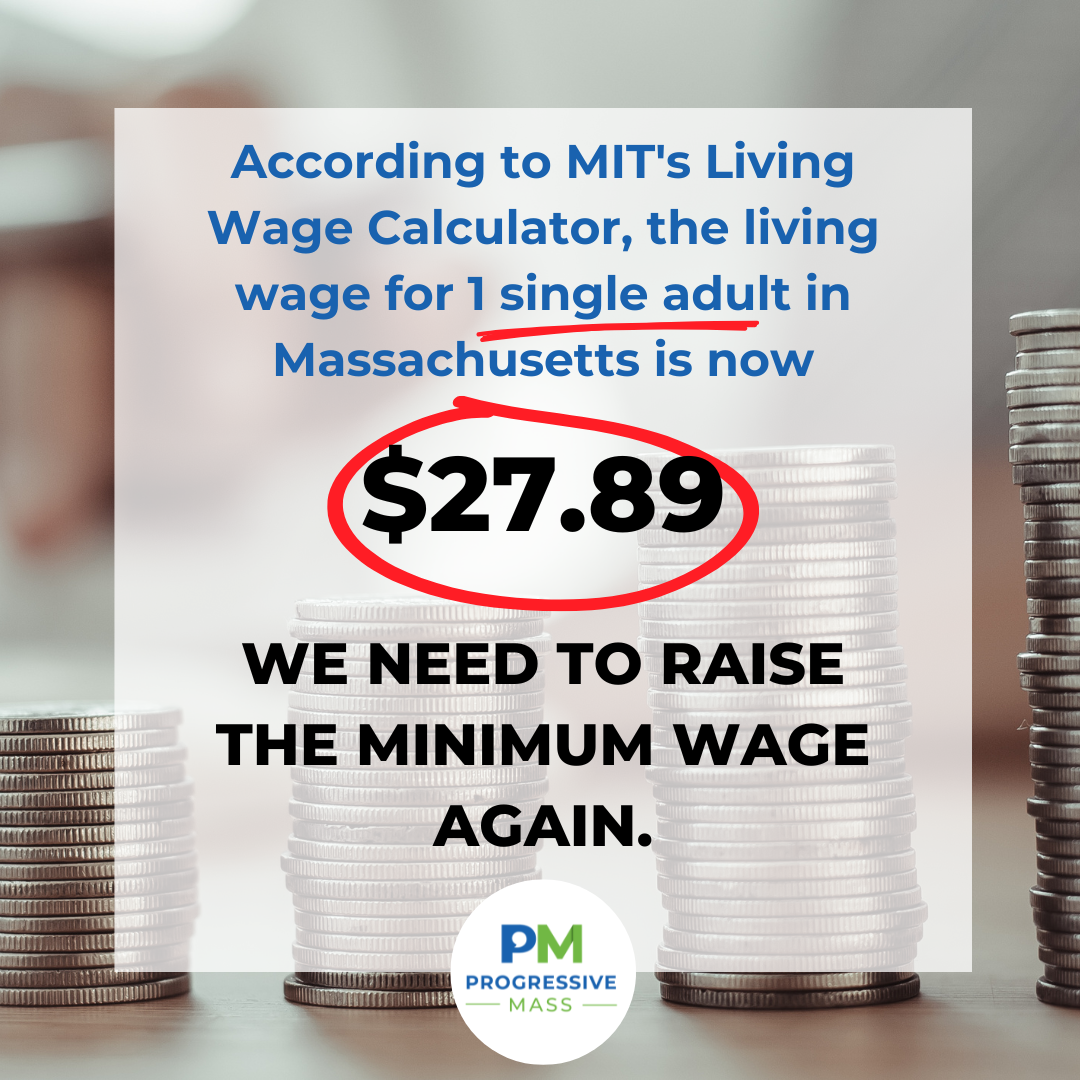
From 2013 to 2018, Raise Up Massachusetts, a coalition of faith, labor, and community groups, worked to bring the statewide minimum wage closer to a living wage, and given the stagnation of the federal minimum wage, our $15 is something to be proud of. But it’s still not a living wage.

And given the rising costs of health care, housing, child care, and basic goods, it doesn’t stretch as far as it did in June of 2018.

That’s why Raise Up organizing to raise the minimum wage again.

New legislation, filed earlier this year by Sen. Jason Lewis and Reps. Tram Nguyen and Dan Donahue (H.1925/S.1200) would raise the minimum wage to $20 and index it to inflation so that it doesn’t lose value over time. And it would include municipal employees, who were left out of the last minimum wage increase.

Can you urge the Joint Committee on Labor & Workforce Development to advance these bills?

Time to Raise the Age

In 2018, Massachusetts passed a comprehensive criminal legal reform bill, but we have much more to do if we want to make our criminal justice system more just.

One of those things: keeping 18 to 20-year-olds in the juvenile system.

H.1710 and S.942: An Act to promote public safety and better outcomes for young adults would do just that.

When young adults are kept in the juvenile system, they are able to have better access to school and rehabilitative programming. Research has shown that similar adolescents have a 34 percent lower recidivism rate when in the juvenile system than in the adult system.

We know that such reforms work: a decade ago, Massachusetts raised the age of juvenile court to keep 17-year-olds out of the adult system, which has led to better outcomes for youth and for public safety.

Our criminal legal system disproportionately harms communities of color in Massachusetts. Only 25% of Massachusetts’ young adult population is Black or Latino, but 70% of young adults incarcerated in state prisons and 57% of young adults in county jails are people of color. Our criminal legal system is limiting young people’s access to opportunities, exacerbating economic inequities.

Can you urge the Joint Committee on the Judiciary to advance these bills?

It’s Back to School at the MA State House. Here’s How You Can Support Public Education.

Earlier this month was back to school season. The backpacks big and small. The school buses. The returning college students. The proud parents taking photos.

Back-to-school season is always a reminder of how critical a reminder of is how critical our investments in public education are. Schools open doors to students for skills, experiences, and pathways to their future lives. Our public schools are anchors of communities. They are engines of democracy and economic opportunity. And they are essential vehicles for reducing economic and racial disparities.

That’s why we’re fighting for legislation this session to improve the full spectrum of education, from child care and pre-K to K-12 schools to public higher ed. Here’s what’s happening–and how you can help.

This Past Monday: Cherish Act Hearing

On Monday, more than a hundred people were in Gardner Auditorium at the State House to support the Cherish Act.

The Cherish Act lays out a comprehensive blueprint for supporting public higher education:

  • debt-free public higher education
  • increased student supports
  • better wages and working conditions
  • green & healthy buildings

Over the course of the hearing, the Joint Committee on Higher Education heard powerful testimony from students struggling to make ends meet, graduates facing mountains of debt, and adjunct faculty lacking basic benefits on the job, underscoring the importance of investing in public higher ed.

If you weren’t able to attend on Monday, here are two things you can still do:

  1. Action Network: Urge the Higher Education Committee to report the Cherish Act favorably out of committee: https://actionnetwork.org/letters/urge-your-legislators-to-support-the-cherish-act/.
  2. Follow the Higher Ed for All coalition on Facebook: https://www.facebook.com/mahigheredforall

Wednesday, October 4: Thrive Act Hearing

Sign up to share that you’re joining us for the Thrive Act hearing on October 4th!

Location: Gardner Auditorium

Time: 2pm – 8pm

The Thrive Act would end the state’s ineffective approach to educational assessment and improvement by:

  • Replacing the undemocratic and ineffective state takeover of local public schools with actual improvement plans and processes
  • Replacing the (mis)use of MCAS as a graduation requirement with graduation based on successful completion of coursework that meets state standards and frameworks
  • Establishing a commission to create an authentic, whole-child system for assessment and accountability.

The state has a responsibility to help all students and schools succeed, but, even by their own measures, the state’s interventions have not worked. It’s time to replace top-down ineffective punitive approaches with approaches that build local capacity, address root causes, and truly help students thrive.

In addition to showing up, here’s how you can help:

  • Testify in person or virtually! Share your story about why this is important to you. Sign up to testify here! (deadline: October 3rd at 3 pm)
  • Join a Testimony workshop: If you’d like support with your testimony, attend a testimony writing workshop hosted by the Thrive Act Coalition.
  • Help us spread the message about the hearing!


Tuesday, October 17: Common Start Hearing

Massachusetts families need affordable and accessible child care and early education. Instead, our state has some of the highest costs in the country, while at the same time many providers are at risk of closure and early educators are not compensated enough for their work. It’s clear: we need a new system.

The Common Start bills would strengthen our commonwealth’s child care and early education infrastructure through a combination of direct-to-provider operational funding and family financial assistance to reduce costs to families while compensating providers for the true cost of providing quality care.

The legislative hearing for the Common Start bills will be on October 17th at 1:00 PM. While the room is yet to be announced, we know that it’s critical for Common Start to show up in full force and pack the hearing room so the Legislature and the Joint Committee on Education know how much support there is for affordable, accessible, early education and care!

The coalition will be organizing buses from various parts of the state and wants to gauge interest. If you can join on October 17 at the State House and would be interested in organized transportation, please fill out this form.

If you would like to write testimony in support of H.489 / S.301, feel free to reference our written testimony guidelines and written testimony template, and if you have any questions about writing testimony, please reach out to James at james@field-first.com.

NEXT WEEK: Show Your Support for Public Higher Ed, State House Employee Union

With the summer over, the Legislature is getting back into the swing of things, with a number of hearings coming up soon. Here are two key ones next week — and what you can do to help.

Monday, 9/18: Hearing on the Cherish Act

On Monday, at 10 AM in Gardner Auditorium at the State House, the Joint Committee on Higher Education will be holding a hearing on the Cherish Act.

Our public colleges and universities are essential vehicles for economic mobility and economic stability. However, our state has been underinvesting from public higher education for the last two decades. When the state reduces funding to public colleges and universities, the result is higher tuition and fees, and a growing debt burden faced by students and families.

The Cherish Act (S.816; H.1260) is a comprehensive response to the problems facing public higher ed today and charts a vision for what a higher education system for all would look like. The bill has four key parts:

  1. Debt-Free Public Higher Education
  2. Increased Student Supports
  3. Recruitment and Retention of High-Quality Faculty and Staff
  4. Green, Healthy, and Safe Campus Facilities
Higher Ed for All

Click here to RSVP for Monday’s hearing.

Click here to register to take a free bus to/from the hearing.

Click here to submit written testimony.

Click here to sign up for a virtual written testimony workshop.

Click here to urge your legislators to attend the Cherish Act Hearing.

Click here to learn more about the Higher Ed for All Coalition!

Wednesday, 9/20: Show Your Support for the State House Staff

Last year, State Senate staffers announced that a majority of their colleagues had signed union authorization cards in March of 2022. They requested voluntary recognition from our Senate President, and after delaying for three months, she refused to recognize the union.

Since then, the Senate has maintained a card majority despite major turnover, and organizers are over 2/3 of the way to a majority in the MA House. In order to unionize, however, they need to change state law on public sector unionization.

H.3069/S.2014, An Act relative to collective bargaining rights for legislative employees, will get a hybrid public hearing in front of the Joint Committee on State Administration and Regulatory Oversight on September 20th at 1pm. These bills would extend to State House staff the same right to unionize, if they choose, that almost all workers in the Commonwealth already enjoy.

  1. Read and sign onto written testimony from MSHEU requesting the SARO Committee support the bills. Please sign the letter from organizations/unions/supportive individuals.
  2. Register to testify in person, or virtually, at the hearing on Sept 20th. You can fill out the linked form by 5:00 PM on Monday, September 18th to register.
  3. Email your state legislators to ask them to co-sponsor H.3069 and S.2014.