While Republicans in DC are creating havoc and letting white supremacist Big Tech billionaires like Elon Musk dismantle the federal government, what are Democrats in Massachusetts doing? Are they taking steps to protect MA from the barrage of cruelty coming from DC? Are they charting a vision for what progressive governance looks like?
No, they are voting today to kick unhoused families out on the streets.
For over 40 years, the Emergency Assistance (EA) shelter program has provided shelter and services to eligible Massachusetts children and families experiencing homelessness. This program represents a commitment to protect children and families in the greatest need. Since November 2023, new policies from the Governor and Legislature have chipped away at access to shelter.
The House is planning to chip away even more by reducing the length of stay even further, excluding many immigrant families, and increasing the administrative burden to gain access to emergency shelter.
Let’s be clear: if Beacon Hill wants to control the costs of emergency shelter, they should listen to providers and advocates, not the comment section of the Boston Herald.
At the start of the legislative session, both Senate President Karen Spilka and Speaker Ron Mariano said that they would take up reforms during the Rules debate in February to increase transparency and boost public confidence in the legislative process.
It’s no surprise why they are singing such a tune: Auditor Diana DiZoglio’s ballot question about auditing the State Legislature won every single city and town with a commanding lead, and the press rightly and repeatedly called out the Legislature last session for missing deadline after deadline and doing so much of their work in the dark (when and if there was work even being done).
But here’s what’s clear to us: we, the public, should be saying what would boost public confidence in the legislative process. That’s not a decision to be left just to State House Leadership.
Everyday people need to have clear ways of following what happens in our State House, making their voice heard, and seeing that their voice can actually have an impact.
Improving public access to information by making committee votes and testimony public
Increasing opportunities for public engagement in the legislative process by providing adequate notice of hearing schedules, further limiting the number of bills per hearing, providing testifiers with an understanding of speaking order, and guaranteeing the right of incarcerated individuals to testify (a practice which began last session)
Creating a more open, robust, and timely committee process by requiring public committee markup sessions and public committee reports with bill summaries, moving up the hearing and reporting timelines, expediting hearings for bills that advanced in the prior session, and requiring Conference Committees to meet in open session
Providing more time to read legislation, whether bills or floor amendments
Inauguration Day was rough. We know that we have our work cut out for us over the next four years to protect Massachusetts from Trump’s hateful agenda and to ensure that Massachusetts is a more just and equitable Commonwealth where “all” really does mean “all.”
You’ll hear from us soon about bills that we can advocate for this session to do both (we’ll be announcing our legislative agenda at our annual meeting), but beyond the work of protecting MA and charging forward, there’s one more critical piece: we can’t go backwards.
And going backwards is exactly what Governor Maura Healey is trying to do with new proposed restrictions on emergency shelter access.
Over forty years ago, Massachusetts passed a right to shelter for unhoused families, based on a moral belief that babies and children should not be forced to sleep on the streets.
But over the past year, Governor Healey has been chipping away at this law bit by bit. After making tighter and tighter time limits for emergency shelter, her latest proposals combine new requirements designed to restrict access, limits as short as 30 days, and a Trumpian ban on undocumented immigrants and new arrivals.
As Trump demonizes immigrants and launches an agenda of cutting vital services to give tax cuts to the rich, the last thing that Massachusetts needs to do is tell him “We’re on board.”
Forty-one years ago, Massachusetts enacted the first-in-the-nation “right-to-shelter” law, guaranteeing all homeless families with children and pregnant women access to temporary housing and other emergency services.
However, over the past year, Governor Maura Healey and our State Legislature have been chipping away at this critical guarantee. Just last month, the MA Governor’s Office announced policy changes that further dismantle the state’s emergency shelter system for all families by creating a two-track system, with some families being sent to barracks-style respite centers capped at 30 days and other families being capped at six months.
Let’s be clear: with our rapidly growing rents, weak tenant protections, and exclusionary zoning policies across the state, affordable housing opportunities do not magically appear after six monthsjust because the state wants to wash its hands of any responsibility to care for our residents. Kicking families out of shelter during the coldest months of the year is especially obscene.
Recently, a group of local elected officials from across the Commonwealth sent a sign-on letter to Governor Healey urging her to end these harmful restrictions. Can you also ask any local elected officials you know (your City Councilor, your Select Board Member, your School Committee Members, etc.) to join them? In solidarity,
The end of the current legislative session is less than four weeks away: 11:59 pm on New Year’s Eve.
Unlike in most years, when most legislative business finishes in July, the House and Senate have continued negotiations around various bills (see here and here) well into the summer and the fall (some are still ongoing).
With the upcoming threat of the second Trump presidency, Beacon Hill shouldn’t come back into session only to finish old business. They need to be proactive about protecting the Commonwealth from the next four years.
We know that the Trump administration, already filled with Project 2025 architects, is planning an all-out assault on immigrants, reproductive rights, the LGBTQ community, workers’ rights, the environment, and so much more. There’s no question about that.
But there is a question about what your state legislators will do. Will they insist on waiting months into next year to take necessary action? Or will they be proactive?
When the new session starts, they will fall back into old habits of not passing meaningful legislation until the very end. We can’t wait until July of2026 to take action.
While You’re At It…Email Gov. Healey Too
Governors in other blue states have already been talking about the steps that they plan to take to to protect their populations and their progress from the new administration. We need our governor to lead as well.
Although the Legislature left formal session with much work undone on August 1st, the 193rd session of the Legislature is not over for a few more months.
Your legislators still need to hear from you about the bills still under negotiation. Read on for two actions to take over the next week.
Wanted: A Robust Climate Bill
When the Legislature left formal session two months ago, they left without consensus on climate legislation. Let’s be clear: it’s not acceptable for the Legislature to go this entire session without passing any new, robust legislation to address the climate crisis. We need legislation, and that legislation must meet the moment.
As 100+ climate organizations recently said in a letter, “We cannot accept a narrow siting and permitting bill that does not do enough for climate justice, reducing climate pollution, or protecting ratepayers as the outcome of 18 months of the legislative process.“
A robust climate bill MUST include the following:
Siting reform that centers environmental justice. Environmental justice communities have suffered the historic burden of pollution from our energy system, and we need to ensure that new facilities do not compound these inequities. The definition of cumulative impact analysis (i.e., the calculation of that historic burden of pollution) in the Governor’s H.5049 is the most accurate and complete definition introduced this session and should be the one used in a final bill that includes siting and permitting reform.
Measures to end large-scale gas pipeline expansion and increase the use of non-emitting thermal networks. The legislature must act immediately to ramp down the expansion of gas infrastructure and put gas companies on a path to provide clean, non-emitting renewable energy rather than fossil gas that leaks methane and air pollution into the atmosphere and into our homes and businesses, costing ratepayers significant sums of money.
Take a few minutes to write to your state legislators in support of coming back into formal session and passing a robust climate bill.
Call Your State Representative about Raise the Age
In July, the Senate voted, as part of their economic development bill, to increase the age of juvenile jurisdiction to include 18-year-olds—keeping high school seniors out of the adult prison system.
The House did not include this important language, and a Conference Committee of three state senators and three state representatives have been negotiating the differences between the two bills.
Let’s keep up the drumbeat for critical juvenile justice reforms.
Tell your Representative that: (1) Raise the Age is an economic development policy and (2) urge the Economic Development Bill conferees to include Raise the Age in the final bill:
Step 2: Call your legislator with this sample script:
My name is _________, and I am a constituent of Representative _______. I ask that the Representative reach out to the Economic Development bill conferees, Chair Parisella, Chair Michlewitz, and Rep. Muradian expressing the Representative’s support for including Raise the Age as passed in S.2869 in the final Economic Development bill.
Subjecting 18-year-olds to adult prosecution, CORI records and adult incarceration causes significant harm not only to the teens themselves but to our economy which is desperate for more – not less – young people to participate in the workforce.
Although the formal period of the legislative session ended on July 31, the MA Legislature is still in session for 3.5 months. And their work isn’t done.
Let’s make sure that the Legislature and Governor Healey hear that.
Call Your State Representative about Raise the Age
In July, the Senate voted, as part of their economic development bill, to increase the age of juvenile jurisdiction to include 18-year-olds—keeping high school seniors out of the adult prison system.
The House did not include this important language, and a Conference Committee of three state senators and three state representatives have been negotiating the differences between the two bills.
Let’s keep up the drumbeat for critical juvenile justice reforms.
Tell your Representative that: (1) Raise the Age is an economic development policy and (2) urge the Economic Development Bill conferees to include Raise the Age in the final bill:
Step 2: Call your legislator with this sample script:
Subjecting 18-year-olds to adult prosecution, CORI records and adult incarceration causes significant harm not only to the teens themselves but to our economy which is desperate for more – not less – young people to engage in our economy.
My name is _, and I am a constituent of Representative _. I ask that the Representative reach out to the Economic Development bill conferees, Chair Parisella, Chair Michlewitz, and Rep. Muradian expressing the Representative’s support for including Raise the Age as passed in S.2869 in the final Economic Development bill.
Join Mass Power Forward to Tell Gov. Healey Not to Kick the Climate Can Down the Road!
Join Mass Power Forward at the State House to call on Governor Healey to not kick the climate can down the road. We must stop expanding the for-profit gas utility system, and right now Governor Healey is proposing a flimsy climate bill with no plan for ending the expansion.
WHAT: Press Conference and Action WHERE: Meet at Nurse’s Hall, 2nd Floor of the Boston Statehouse WHO: You and your friends WHEN: Tuesday, Sept. 24th at 12pm
One point we underscored is that even though the Legislature adjourned on July 31 (well, technically, the morning of August 1), the full legislative session doesn’t end until next January. That means that they could come back into session at any point to finish important business, especially passing a robust and equitable climate bill that centers environmental justice and includes a transition away from gas.
But they are not likely to do that unless they hear from you, their constituents. So take a minute today to email your legislators.
Protect the Right to Shelter
Massachusetts prides itself on being a welcoming state, but Governor Healey’s cruel and unnecessary restrictions on emergency shelter run afoul of that.
Join the Massachusetts Coalition for the Homeless and the Mass Law Reform Institute tonight at 7 pm in front of the State House for a candlelight vigil in support of children and families experiencing homelessness.
Although Massachusetts has a full-time legislature, the formal Legislative Session will end tomorrow.
After tomorrow (well, after the wee hours of Thursday morning), the State House will not likely be taking any more recorded votes for the rest of 2024.
As we noted last week, many important priorities are still in play. If you haven’t contacted your legislators yet, now is the best time.
Here’s what you can do:
Email Governor Healey in opposition to emergency shelter limits (new action alert)
Email your state senator about maternal health justice (new action alert)
Email your state rep in support of juvenile justice reform
Email the Housing Bill conference committee
Email the Climate Bill conference committee
Email the Ways & Means chairs about the Prison Moratorium
And whichever action or actions you take, make sure to share it with your networks too to keep the momentum going. In solidarity, Jonathan Cohn Policy Director Progressive Massachusetts
Email Governor Healey in Opposition to Shelter Limits
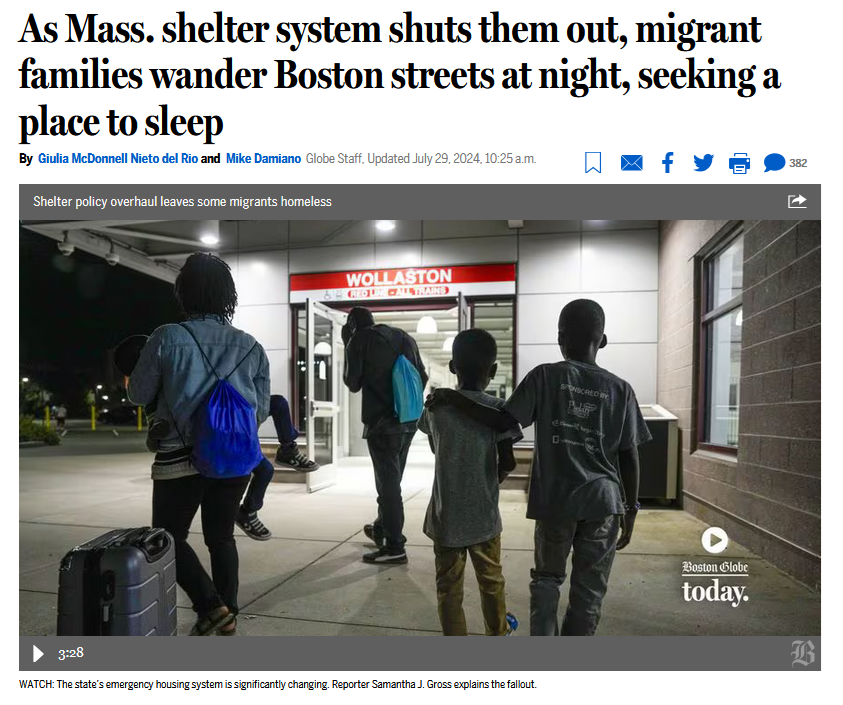
Last week, the Healey administration announced that it would limit stays in overflow shelters to five days beginning August 1st (this Thursday).
We can’t turn our back on our state’s right to shelter law (a law in which we should take pride), and we can’t turn our back on families seeking help. It’s simple: an affluent state like Massachusetts should not be kicking out families and young children to live on the streets.
Everyone in Massachusetts should be able to choose where they give birth and the type of maternity care that is most appropriate for their needs. Unfortunately, our state currently lags the nation when it comes to access to midwives, birth centers, home birth, and integration of care — models that can reverse our rising maternal mortality and growing racial inequities in birth outcomes.
The best time to contact your legislators is yesterday. The second best time is today.
That’s because time is short. The current legislative session will wrap up next Wednesday, and major decisions will be made between now and then.
As I noted in Monday’s update, this email will be longer than I’d like. That’s because our Legislature, despite being a full-time body, has the tendency to push off everything to the last month, last weeks, even last day of the legislative session. The public deserves a better process, and I’m sure most legislators would prefer one too.
But we wanted to keep you in the loop about what’s happening and what you can do. There will be an array of actions you can take: make a plan to choose at least one action step, and talk to friends about it.
Here’s what you can do:
Email your state rep in support of Raise the Age
Email the Affordable Homes Act Conference Committee
Email the Climate Bill Conference Committee
Email the Ways & Means chairs about the Prison Moratorium
Show up on Monday in support of families experiencing homelessness
Make sure to check out our blog for other updates, and stay tuned for action steps. Many bills move quickly at the end of the session (Example: We just learned that the Senate is taking up an important maternal health bill next Tuesday.) In solidarity, Jonathan Cohn Policy Director
Progressive Massachusetts
Email to Your State Rep: Raise the Age
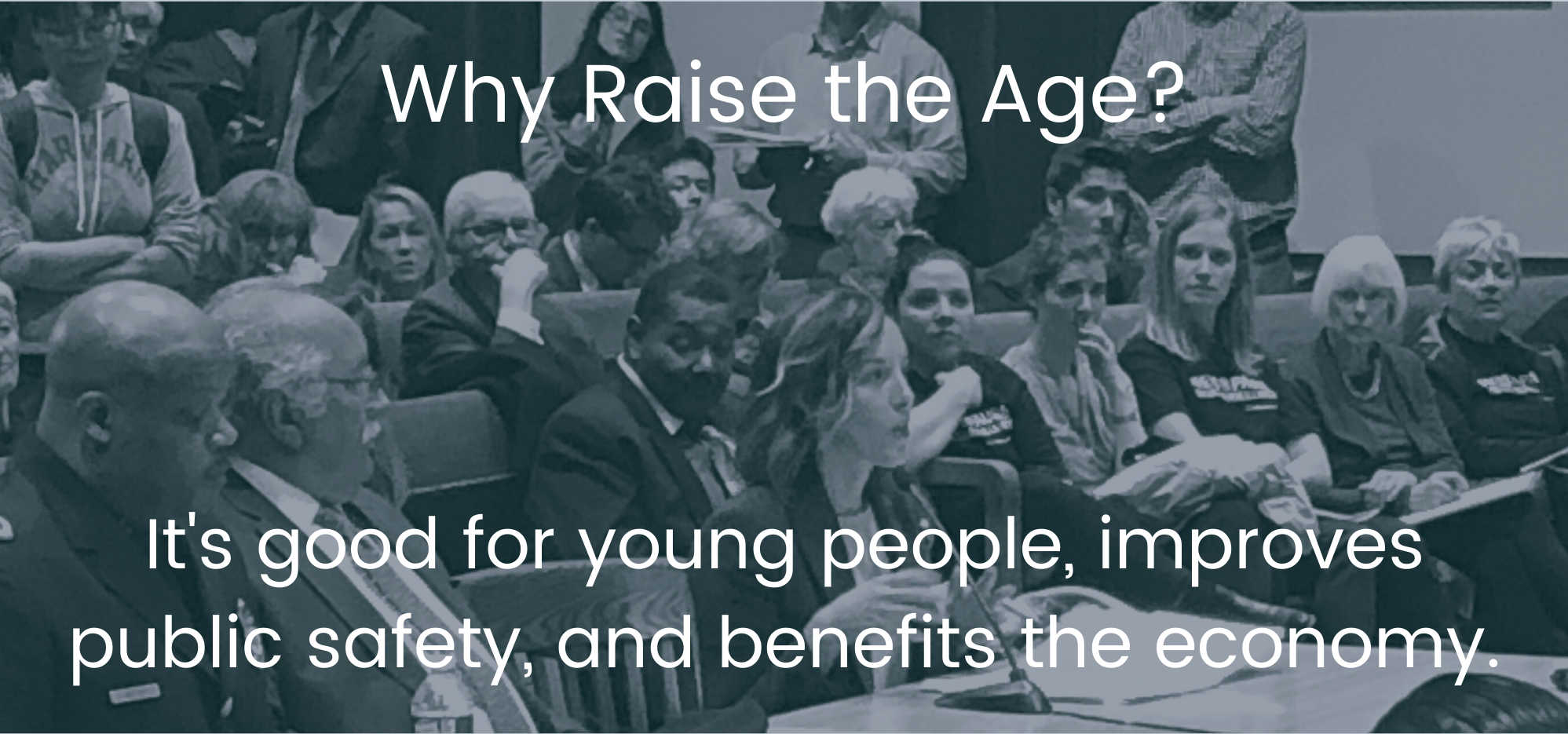
On July 11, during the debate on its economic development, the MA Senate voted 31 to 9 to keep 18-year-olds out of the adult prison system.
Shifting legal system-involved youth from the adult criminal legal system into the juvenile system improves young people’s access to education and skills training, even if they are never incarcerated. Young people’s prosecution as adults during their late adolescence derails their education, which can have serious effects on their ability to attain employment during these critical adolescent years, diminishing their lifetime earnings, and preventing them from contributing fully to the Massachusetts economy.
The economic development bill is now in Conference Committee, where three senators and three representatives will negotiate a final bill. Here’s what you can do:
Email the Affordable Homes Act Conference Committee
Last month, the MA House and MA Senate passed versions of Governor Maura Healey’s Affordable Homes Act.
WHAT HAPPENED: Like Healey’s original version of the bill, both bills established an Office of Fair Housing, legalized accessory dwelling units in single-family zoning districts without undue restrictions, streamlined the use of state-owned land for housing, and increased the bond authorizations for public housing, building decarbonization, and many more housing initiatives. Unfortunately, however, both chambers caved to the real estate lobby and axed the widely popular local option real estate transfer fee (which would have allowed cities and towns to raise extra money to invest in affordable housing).
But the two bills had a number of differences, and a Conference Committee of three senators and three representatives are negotiating final details.
WHAT IS AT STAKE: We have a displacement crisis in Massachusetts, and it is essential that the final version of the Affordable Homes Act contain policies to help renters and working-class homeowners.
Creating a process for sealing eviction records (Senate bill)
Banning brokers’ fees (Senate bill)
Establishing a Tenant Opportunity to Purchase local option (House bill)
Creating a Foreclosure Mediation Pilot Program (Senate bill)
A Conference Committee of three state senators and three state representatives are negotiating the final details of the bill.
If we are to make a dent at addressing the affordable housing crisis, we need more investment, we need more housing production, and we need policies to prevent displacement. The Legislature shouldn’t leave out that critical final piece.
You can also email them directly and cc your own legislators, using the following emails:
Last week, the House took up its climate omnibus bill. While the bill contains a number of important reforms, it lacks the ambition of the Senate’s recent bill, which did far more to accelerate the transition away from gas. And the Senate’s bill still hadn’t gone far enough to meet the moment, especially around environmental justice.
Mass Power Forward, the coalition of climate justice advocacy groups, is asking people to email the six-person Conference Committee finalizing the details of this bill. Here is a template you can use:
I am writing to you regarding the Climate Omnibus bill. Both the Senate and the House bills are missing critical pieces. In particular, we need a robust cumulative impact analysis in line with current practice and a halt on new gas expansion. Please see this letter for further details.
This is important to me because
Best,
NAME
Email the Ways & Means Chairs about the Prison Moratorium
Last session, the MA Legislature passed a moratorium on new prison and jail construction, only for then Republican governor Charlie Baker to veto it.
New session, new opportunity. But time is running short.
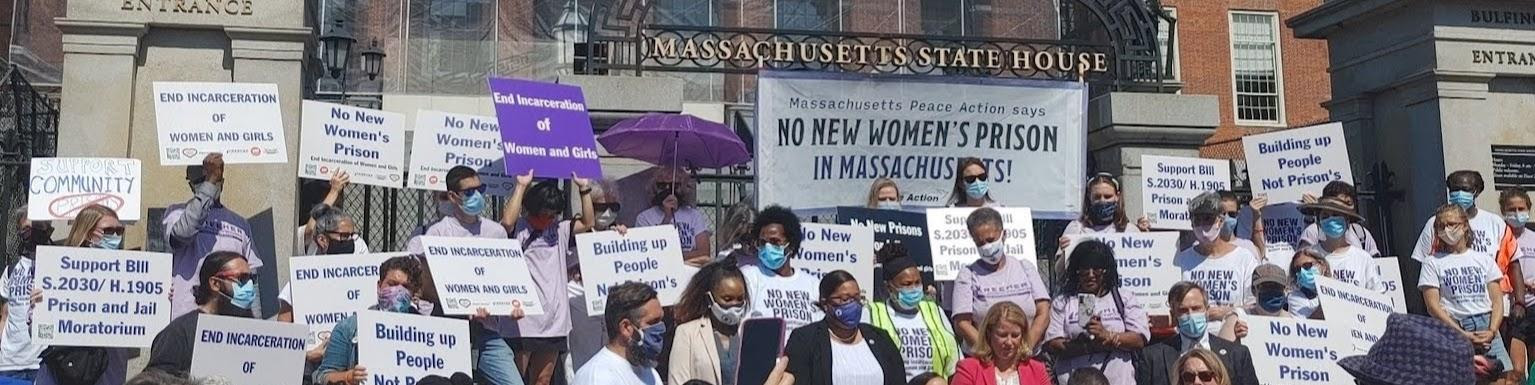
The Prison Moratorium bill (S2821), which would put a five-year pause on the construction of new prisons and jails, was reported favorably out of the State Administration and Regulatory Oversight Committee. It needs to get a vote on the floor by next Wednesday.
Families for Justice as Healing is asking that people contact the two Ways & Means chairs in support of this critical bill:
Email/call script: “Hello, my name is _______ and I am calling to ask the Chairman to please bring the Prison Moratorium bill S.2821 of Ways and Means to the floor for a vote. Both chambers of the legislature already passed the Prison Moratorium last session, and the State Admin Committee worked hard to clarify the language so it’s even more clear that repairs can still be made for the wellbeing of incarcerated people. Passing the Prison Moratorium is a top priority for me, and this bill is supported by incarcerated people, formerly incarcerated people, community members from all over the state, clergy and faith leaders, public health experts, social workers, and medical providers. Please Pass the Prison Moratorium before the end of the session. Thank you.”
Support families experiencing homelessness and the right to shelter!
On July 23rd, Governor Healey announced changes to the Emergency Assistance (EA) family shelter system that will force children and their families out with no safe place to sleep at night. Families who are deemed eligible for shelter will now be forced to choose: wait in an unsafe place for a shelter placement or stay for 5 nights in a state-run overflow site but then wait at least 6 months to access EA shelter. This policy change will disproportionately impact immigrant families, both new arrivals and long-term Massachusetts residents.
Join our allies from the Massachusetts Law Reform Institute and the Massachusetts Coalition for the Homeless in front of the State House on Monday, July 29th, 11 a.m.–12 p.m. to call on the Governor and Legislature to uphold access to shelter for children and families.




.png)